

Set Volume for Muscle Size: The Ultimate Evidence Based Bible
TL;DR Version
- On average, muscle growth tends to be best around 6-8 hard sets per muscle group per training session when taking long rests. That can be 12 - 24 weekly sets for a frequency of 2-3 days per week. Volume needs may be double this when taking short rests, but the max muscle growth is still around the same so there's no advantage to doing short rests.
- Individual results may vary substantially from these averages, with some individuals having volume ceilings much higher than 8 sets per session or 20 weekly sets.
- Volume increases are best done in small (20%) increments.
Key Takeaways
- Updated meta-analytic data shows a logarithmic relationship between training volume and hypertrophy in a single session. Gains increase rapidly at small volumes and there is diminishing returns as you get to higher session volumes.
- On average, hypertrophy appears to increase with increasing volumes of up to 6-8 hard sets in a single training session when taking long rests between sets, with a plateau at higher volumes. This is approximately 12 - 24 weekly sets when training each muscle 2-3 days per week.
- Individual results may vary substantially from these averages, with some individuals having volume ceilings much higher than 8 sets per session or 20 weekly sets.
- There's an interaction between set volume and rest intervals. Since short rest intervals may impair hypertrophy for a given set volume, you have to do more hard sets to make up for it. Thus, volume requirements may be approximately twice that of long rest intervals.
- There is a volume/frequency interaction. There is some evidence of a maximum effective dose per training session, although it will vary from one individual to the next. To increase weekly volume, rather than continuing to increase volume above this ceiling per session, it's better to split weekly volume up into higher frequency.
- Some evidence indicates that there are less non-responders with higher volumes, and that people tend to be more responsive when increasing their volume relative to what they were doing before.
- When increasing set volume, it is best to do it in small increments (20%).
- Given that people tend to be more responsive when increasing volume relative to what they were doing before, there is a theoretical case for cycling set volume. This would involve slowly increasing volume over time to the highest effective per-session volume until a performance plateau is reached. Volume would then be decreased to a maintenance level for a period of time to re-sensitize the muscle to a volume stimulus. Volume would eventually be increased again, and this pattern would be repeated over time.
- Regardless of training volume, genetics play a strong role in hypertrophy. People who respond well to low volume will also tend to respond well to high volume, and people who don't respond well to low volume will likely still be a low responder to high volume (although the response will likely be improved).
Practical Application
- Hardgainers may benefit from increasing their volume, compared to the popular strategy of reducing volume and frequency.
- When taking long rests (2+ minutes), per-session volumes of around 6-8 sets per muscle group will likely produce the best hypertrophy on average in trained subjects, although individual results and needs may vary dramatically from that average. Set volume may need to be double that when taking short rests (<=90 seconds).
- The classic "bro-split" of blasting a muscle group for very high volumes (like 20 sets) once per week is likely an inferior way to train, and it is better to split the volume up into frequencies of 2-3 days per week.
- If you're training a muscle group twice per week with long rests, 12-16 weekly sets is likely a good range to give you the best "bang for your buck" when considering results versus time investment, although individual needs will vary. Some individuals may need volumes substantially higher than this.
- YOU MUST CONSIDER THE NEEDS OF THE INDIVIDUAL WHEN PROGRAMMING VOLUME, including schedule, volume tolerance, recovery ability, available time to train, importance of achieving maximal hypertrophy, injury history, etc.
- The maximum number of effective sets may be impacted by rest intervals, types of exercise used (compound versus isolation), and previous training volumes. Shorter rest intervals (90 seconds or less) with compound movements may require more sets to get the same response (and thus not necessarily save any time).
- People who have plateaued on low-to-moderate training volumes may benefit from an increase in training volume.
- Increases in set volume should be small (around 20%).
- This data doesn't suggest you train with high volumes all the time. Periods of low volume training may be necessary to help with recovery.
- A volume cycling approach may be beneficial. In this approach, set volume is slowly increased over a period of time, until a maximum effective amount is achieved. This could be where successive 20% increases in set volume fails to stimulate further gains. Once this plateau is reached at this high volume, volume is reduced to a maintenance level (2-4 sets per muscle per session, 2-3 times per week) for a period of time to re-sensitize the muscle to a volume stimulus. Set volume is then ramped back up to the maximum effective dose, and the volume cycle is repeated.
TABLE OF CONTENTS
- Introduction
- What do we mean by set?
- Impacts of set volume on:
- Beyond the biopsies: statistical power and studies on hypertrophy
- Meta-analyses on volume and hypertrophy
- Volume and strength
- How much is too much?
- High volume dose response studies
- Finding Your Individual Volume Ceiling
- The Theoretical Case for Volume Cycling
- Volume Cycling Via Alterations in Frequency
- The Genetics of the Volume Response
- Counting Sets: The Direct Vs. Indirect Problem
- The practical limitations of very high volumes: a personal experiment
- Tying it all together
- Practical Application: A Moderate Volume Example
- Practical Application: A High Volume Specialization Example
- Wrapping it up
"How many sets should I do?" is probably one of the most common questions that people have when trying to build muscle. In fact, the number of sets you should do to build muscle can be such a point of contention that people have fought internet and journal article wars over it. Entire training philosophies (i.e., High Intensity Training and Heavy Duty) have been built around how many sets people think you should do. In fact, for years, people have been arguing over whether you should train with a low number of sets, or high number of sets, to maximize muscle hypertrophy.
The best approach, of course, is to examine the scientific evidence, and consider where the overall weight of the evidence lies. In regards to training volume, it's not that easy, due to the limitations in the existing research. Still, that doesn't mean we can't come up with some solid evidence-based recommendations.
What Do We Mean by Set?
The first thing we need to clarify is what we mean by a "set." In a weight training workout, there are a lot of ways you can do a set, from a warm-up set that hardly pushes you to failure, to a gut-busting set of 20-rep squats to failure. In this article, a set is going to be defined as a set of moderate to high repetitions (approximately 8 reps or more) to muscular failure or near failure. I use this definition because high load, low rep sets do not produce as much hypertrophy as more moderate 8-12 rep sets, despite an equivalent number of hard sets. However, moderate-rep and high-rep sets to failure are similar in their impacts on muscle hypertrophy. Also, a set should be to near muscular failure, because stopping well short of failure will impair muscle hypertrophy. Finally, a set counts towards a particular muscle group if that muscle group can be considered a prime mover in the exercise that is being used. For example, 3 sets of bench press will count as 3 sets for triceps, since the triceps are active prime movers in a bench press. Three sets of bench press, and 3 sets of tricep pushdowns, would count as 6 total sets.
Set Volume and Muscle Protein Synthesis
One of the first places we can look for evidence is in the impact of set volume on muscle protein synthesis. Remember that resistance training stimulates protein synthesis, the process by which your muscles build new protein. When this process of protein synthesis exceeds the rate of protein breakdown, your muscles grow. The elevation in protein synthesis happens very quickly after a training session, and continues for 24-48 hours after the session. If set volume impacts muscle hypertrophy, then it would stand to reason that it may impact muscle protein synthesis as well.
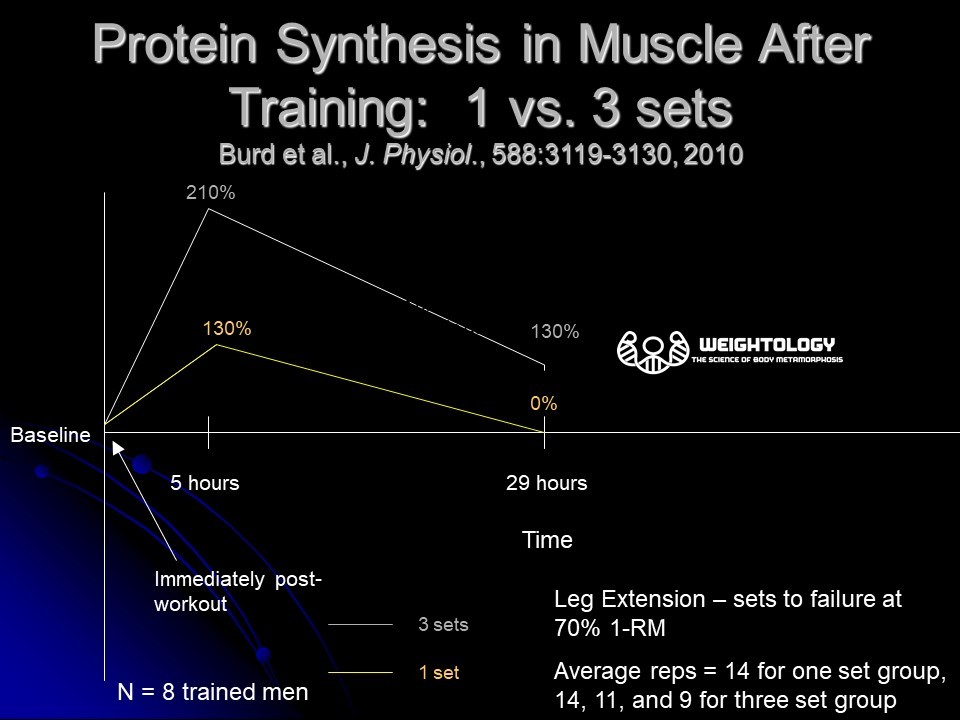
One study that examined the impact of set volume on muscle protein synthesis came out of the lab of Stu Phillips. The researchers compared 3 sets of leg extensions to 1 set of leg extensions. Both groups trained at 70% 1-RM to muscular failure. Fed-state muscle protein synthesis (the amount of protein your muscles make after you eat a meal, which is really important when it comes to building muscle size) was elevated by almost twice the amount in the 3-set group compared to the 1-set group. Protein synthesis was still elevated by 130% at 29 hours after the training session in the 3-set group, but was back to normal in the 1 set group. In other words, muscles were not only making more protein soon after the workout with 3 sets to failure, but they were still making more protein 29 hours later compared to 1 set. Since muscle protein synthesis correlates with gains in muscle size once you get past the initial muscle damage, this would imply that 3 sets is better than 1 set for putting on muscle.
In another study looking at the impact of set number on muscle protein synthesis, 6 sets of 8 reps at 75% 1-RM on the leg extension caused greater muscle protein synthesis up to 2 hours after the training session, as compared to 3 sets. This was true in both young and old subjects. Also, in the older (but not the younger) subjects, 6 sets of 14 reps at 40% 1-RM caused a greater muscle protein synthesis response compared to 3 sets. There are two major problems with this study. First, subjects did not train to failure...8 reps at 75% 1-RM, and 14 reps at 40% 1-RM, can be far short of failure for some individuals on a leg extension. Second, the researchers only measured protein synthesis out to 4 hours. Thus, this study might suggest that 6 sets per muscle group is better than 3 for muscle protein synthesis, but there are a lot of limitations to the study.
In a third study by Damas and colleagues, 12 sets to failure with 2 minute rests on the quadriceps (6 sets of leg press and 6 sets of leg extensions) only caused a small increase in muscle protein synthesis compared to 8 sets to failure (4 sets of each exercise) in trained subjects.
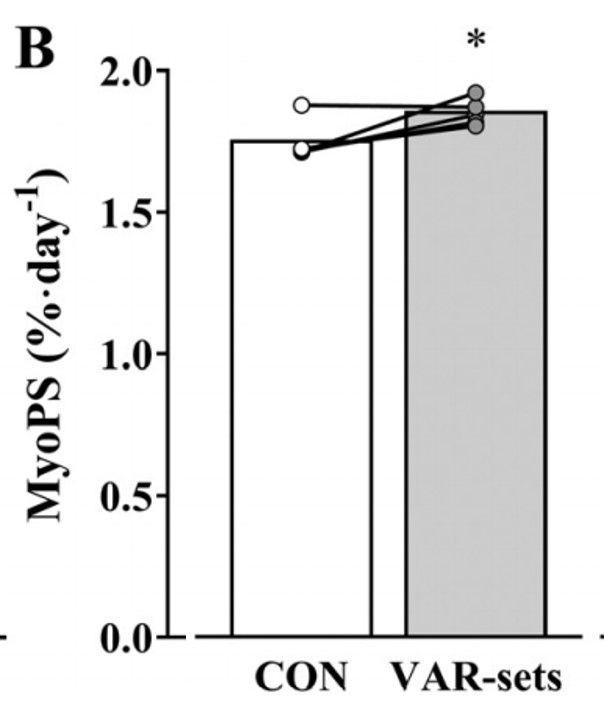
From Damas et al. (2019). VAR-sets did 12 sets in quadriceps, while CON did 8 sets. The increase in muscle protein synthesis from the additional 4 sets was very small, and was not related to hypertrophy.
This small increase in muscle protein synthesis was not associated with greater hypertrophy over 8 weeks, suggesting that the small increase may have been more due to a small increase in muscle damage. This data suggests that muscle protein synthesis may begin to plateau somewhere in the 8-12 set range.
Finally, one rodent study found that muscle protein synthesis increased with an increasing number of "sets" of electrically stimulated muscle contractions, statistically plateauing at 5 sets but the raw mean peaked at 10 sets. Protein synthesis tended to be lower at 20 sets. However, a "set" in this study may not be equivalent to a a set as we define it. There are also other differences which I described in a research review. Regardless of these differences, this data does align nicely with the previous study by Damas et al., suggesting a plateau in muscle protein synthesis somewhere around 10 sets.
Given these studies, we can say that multiple sets will create more protein synthesis than single sets to failure, and it looks like the response may plateau between 8-12 sets in a session on average.
Set Volume and Anabolic Signaling
Another place we can look is the impact of set volume on anabolic signaling. When you train with weights, the tension on your muscles sends molecular signals to muscle cells to start creating new protein. One important molecular signal is called p70S6K phosphorylation, which has been found to correlate with gains in muscle size when measured 5 hours after a training session.
There have been some studies that have examined the impact of set volume on p70S6K phosphorylation. One study showed 10 sets of 10 RM (leg press, 2 min rest) resulted in greater p70S6K phosphorylation compared to 5 sets of 10 RM when measured 30 minutes after the session. In the protein synthesis study out of Stu Phillips's lab that was mentioned earlier, p70S6K phosphorylation was significantly elevated at 29 hours after 3 sets of leg extensions, but not 1 set. In a third study, 3 sets of 6 RM of a leg press resulted in a threefold elevation of p70S6k phosphorylation, and 5 sets of 6 RM resulted in a sixfold elevation (i.e., double the response). In the rodent study mentioned earlier, p70S6K phosphorylation continued to increase with increasing "set" volume up to 20, although "sets" here cannot be considered equivalent to human sets. In a fifth study, phosphorylated S6K were 19% greater with 6 sets per muscle group performed in a training session versus 2 sets.
Another molecular anabolic signal we can look at is the mechanistic target of rapcomycin or mTOR, a protein that regulates muscle protein synthesis. In this study, 6 sets per muscle group per session resulted in 12% higher phosphorylation of mTOR compared to 2 sets. In this same study, the higher volume resulted in a 28% greater phosphorylation of ribosomal protein s6, another signaling molecule involved in muscle protein synthesis. The higher volume also caused greater levels of RNA (a marker of creation of ribosomes, which are the site of protein synthesis) and transcription factor c-Myc, which is important in initiating RNA transcription (one of the steps in muscle protein synthesis).
Overall, the anabolic signaling data tells us that "more is better" in terms of sets, but it doesn't give us an optimal range or tell us when "more" becomes "too much."
Set Volume and Satellite Cells
Muscle fibers have nuclei, which are the control centers for these muscle fibers and contain important genetic information. To repair or build new muscle fibers, you need new nuclei. Enter satellite cells, which are dormant cells located outside of muscle fibers. When a muscle fiber is damaged, satellite cells donate their nuclei to allow the fibers to be repaired and grow. Thus, satellite cells are an important component in the process of muscle hypertrophy. Thus, if set volume impacts muscle size, then one mechanism through how it does so may be through satellite cell activation.
Only one study has looked at the impact of set volume on satellite cell activation. In this study, 3 sets of leg press and 3 sets of leg extension (6 sets for quadriceps total done 3 times per week, or 18 total weekly sets) resulted in greater satellite cell activation than 1 set of leg press and 1 set of leg extension (2 sets for quadriceps per session, or 6 weekly sets). This was accompanied by a much greater increase in leg extension 1-RM strength as well (48% versus 29%). This would suggest that a total weekly set volume in the teens might be better than single digits, at least for legs.
In this study, researchers also looked at satellite cell activation in the trapezius, as well as shoulder press strength. They did not observe any impact of set volume on either satellite cell activity or shoulder press strength. However, given that the trapezius is not a prime mover in the upper body exercises used in this study (seated chest press, seated rowing, lat pulldown biceps curl, and shoulder press), the satellite cell activity in the trapezius may not give us sufficient information as to the impact of set volume on satellite cells in the upper body.
Overall, this data would suggest that a weekly set volume in the teens is likely better for hypertrophy than single digits, at least for the legs.
Beyond the Biopsies
So far, all of this data only tells us that, if you want to gain as much size as possible, multiple sets per muscle group are better than single sets, more sets are better than less (to a point), and weekly volume in the teens may be better than in the single digits. But this is all based on extrapolation from data derived from muscle biopsies. Ultimately, we need to look at what happens to changes in muscle size when you put people on training programs with different set volumes.
A fair number of studies have been done over the past few decades, that have looked at changes in muscle size when comparing different set volumes. Results have varied, with some studies (like this one) showing more muscle gain with more sets, while other studies (like this one) showing no significant difference with more sets. Differences in outcomes between studies might relate to differences in study design, in populations used, in training volume, in training frequency, etc. However, another key factor that may explain the differences is one of sample size (i.e., the number of subjects in each study).
To give you an idea of why sample size may impact the results, let's say you want to do a study that compares low volume training to high volume training. You need to know how many people you should recruit to your study. So, you do what is called a power analysis. This gives you an approximation of how many subjects you will need to successfully detect a particular difference between groups. To do a power analysis, you need an idea of what sort of difference you are interested in seeing. For example, perhaps you think that high volume training will give you double the muscle gains. You then use data from previous research to get an idea of what the typical level of muscle gain in a study happens to be, and how much it tends to vary from one person to the next. This data goes into the power analysis, and you end up with an estimate of how many people you are going to need.
Let's go through this power analysis exercise with some real world data. Direct measurements of muscle size (like ultrasound) are superior to indirect measurements (body composition techniques like DEXA), so we'll stick with data that uses those types of measurements. Typical changes in muscle thickness, assessed by ultrasound, tend to be around 5-10% over a typical 8-12 week study. So, let's say I think a low volume group might experience a 5% change in muscle thickness, and a high volume group might experience a 10% increase in muscle thickness. Essentially, I'm guessing that I'll get double the gains with high volume over low volume.
So what is the number of subjects that I need? Using data from a rest interval study I collaborated on with Brad Schoenfeld, Menno Henselmans, and others, and then running the data through some online power analysis software called GLIMMPSE, it turns out I would need approximately 100 subjects per group to declare a 5% versus 10% gain in muscle size as statistically significant, 80% of the time!!!!!! If I reduce this to 50% of the time, I would still need about 50 subjects per group!
In other words, if I did 100 studies, and wanted to be able to declare a doubling of muscle size as statistically significant in only 50 of those studies, I would need 50 subjects per group!!!!
Now, what is the typical sample size of most weight training studies? Maybe 8-15 subjects per group?
Let's look at the statistical power if you only had 10 subjects per group. Running the same data through GLIMMPSE, I get a statistical power of approximately 30%. This means that, with only 10 subjects per group, you will declare a 5 versus 10% gain in muscle size as statistically significant in only 30 out of 100 studies!
This means that most weight training studies on volume are essentially set up to fail to detect important differences. Changes in muscle size are small, and vary a lot from one person to the next, and so you need HUGE differences between groups to detect a difference over a typical 8-12 week study that only has around 10 people per group. But the reality is that the impact of doubling your training volume isn't going to result in 3-4 times the gains. It might result in a doubling of gains, but, as you just learned, most weight training studies have sample sizes that are simply too small to detect even that amount. This is why you see disparate results among studies. Some will successfully detect a difference based on random chance alone, while others will miss a difference, even if a true difference exists (in statistics, this is called a type 2 error or false negative).
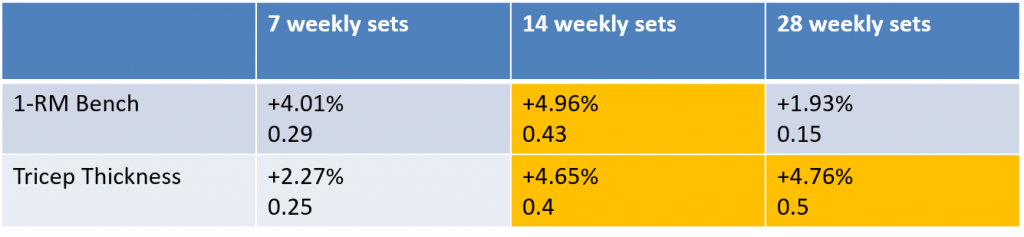
Here's an example of a possible type 2 error. Ostrowski and colleagues looked at the effects of weight training set volume on muscle size. They compared three volume levels: low, medium, and high. The following table shows the percentage gains in muscle size, as well as the effect size (a measurement of the meaningfulness of an effect), for each group:
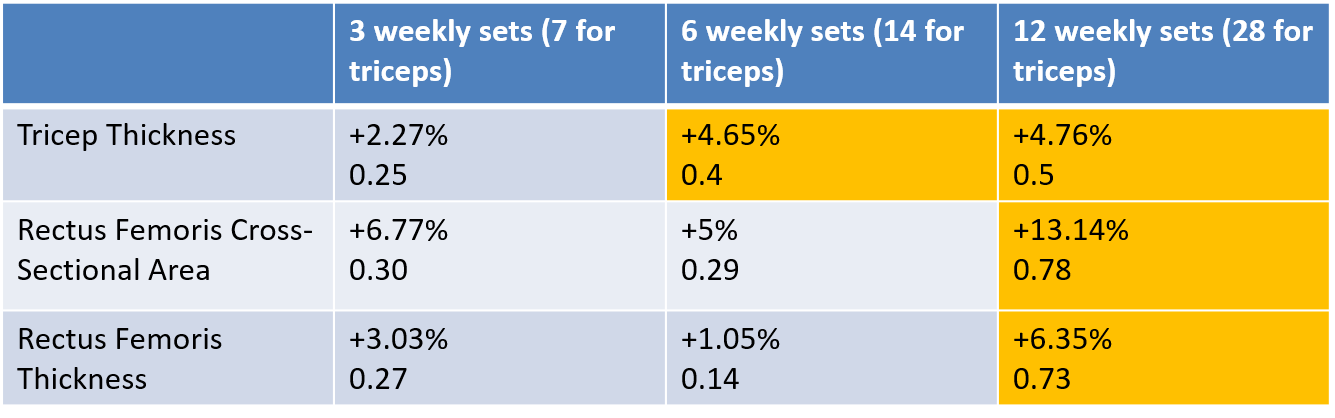
In this study, double-digit weekly set volumes resulted in approximately double the muscle gains (the orange cells), but these differences were not statistically significant. Why would this happen? This study only had 9 subjects per group, so there's a good chance this is simply a false negative or type 2 error.
Enter the Meta-Analysis
Realizing the limitations in the existing data, in 2010 I decided to do a meta-analysis on the impacts of set volume on muscle hypertrophy. A meta-analysis is a "study of studies." This is where you group a body of studies together, and statistically analyze them to see if there's an overall trend. In other words, it's a formal way of seeing where the weight of the evidence lies. A meta-analysis can be useful when you have a lot of studies with small sample sizes. The idea is, perhaps each study alone is too small to be able to detect a significant difference between groups, but if you group all the studies together, most of the studies should favor one group over another in terms of the raw average, if there's truly a difference. Basically, if a lot of studies have results like the one by Ostrowski that I mentioned above, then that's a pretty good indication that higher volumes truly are better...it's just that the studies are too small in size to consistently show it (i.e., a type 2 error as I mentioned earlier).
When I did this analysis, I found that multiple sets per exercise were superior for hypertrophy compared to single sets. Both categories of 2-3 sets per exercise and 4-6 sets per exercise were greater than 1 set. The magnitude of the average effect size (again, effect size is a value assessing the meaningfulness of an effect) tended to favor 4-6 sets over 2-3 sets, although that difference was not statistically significant. Here's a chart from the study:
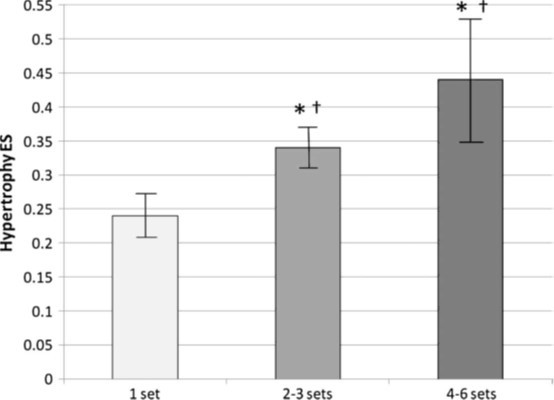
Now, there were a number of limitations to this analysis. First, there were only 8 studies that met my inclusion criteria. There were only 2 studies that involved 4-6 sets per exercise. There wasn't enough data to determine if there were differences due to factors such as training status (i.e., trained versus untrained subjects). I was the sole author on this paper, so there was no one available to double check my work, and thus it's always possible some bias or error could sneak in. This analysis only tells us about volume in a single session, and not overall weekly volume. Finally, sets per exercise is not the same thing as sets per muscle group. For example, you could do 1 set of incline press, 1 set of flat press, and 1 set of decline press, and that's 3 sets for your chest, but in this analysis it would be categorized as 1 set. Still, more sets per exercise will still mean more sets per muscle group, so this meta-analysis clearly showed that your gains increase as your volume increases.
An Even Better Meta
Six years later, more studies on hypertrophy had come out. Brad Schoenfeld, Dan Ogborn, and I discussed doing an updated meta-analysis, with all of the new research included. In this analysis, we would have multiple individuals coding the studies to serve as a double-check on accuracy, and help reduce bias. We would also look at volume in terms of sets per muscle group per week, rather than sets per exercise. Our results were published in the June 2017 issue of the Journal of Sports Science, and we confirmed a relationship between training volume and hypertrophy. I'll note that since that paper was published, we did discover an error in how volume was classified for a study by Correa and colleagues; we erroneously classified weekly volume as 9 sets in the high volume group and 3 in the low volume group, but it in fact was 18 in the high volume group and 6 in the low volume group. While this did not materially impact the conclusions of the paper, it did impact the dose-response relationship so that it wasn't apparent as you moved from <5 sets to 5-9 sets (but it still existed for higher volumes). I'm reporting the fixed numbers to you this review, so they are slightly different from the published paper.
First, we found a highly significant effect (with a P value of 0.003...remember that 0.05 is considered significant) for each additional weekly set. For each additional weekly set that was done, the effect size would increase by 0.027, and the percentage gain in muscle size would increase by 0.38 percentage points. So, if you did 16 weekly sets (such as 8 sets per muscle group, twice per week) compared to 6 weekly sets (like 3 sets per muscle group, twice per week), the effect size would be higher by 0.27, and the percentage gain would be higher by 3.8 percentage points (such as an 8.8% improvement in muscle size versus a 5% improvement). Now, this analysis assumes a linear relationship between set volume and hypertrophy, which in real life would likely not be the case. In other words, this doesn't mean you can just keep doing more and more sets and assume the gains keep going higher; at some point they will level off and possibly even regress due to overtraining. Unfortunately we didn't have enough studies utilizing really high volumes to get an idea where the upper limit for volume might be.
When categorizing the weekly set volumes into <5, 5-9, and 10+ weekly sets, there was a distinct advantage to double digit weekly set volumes, with nearly double the gains (ES = Effect Size).
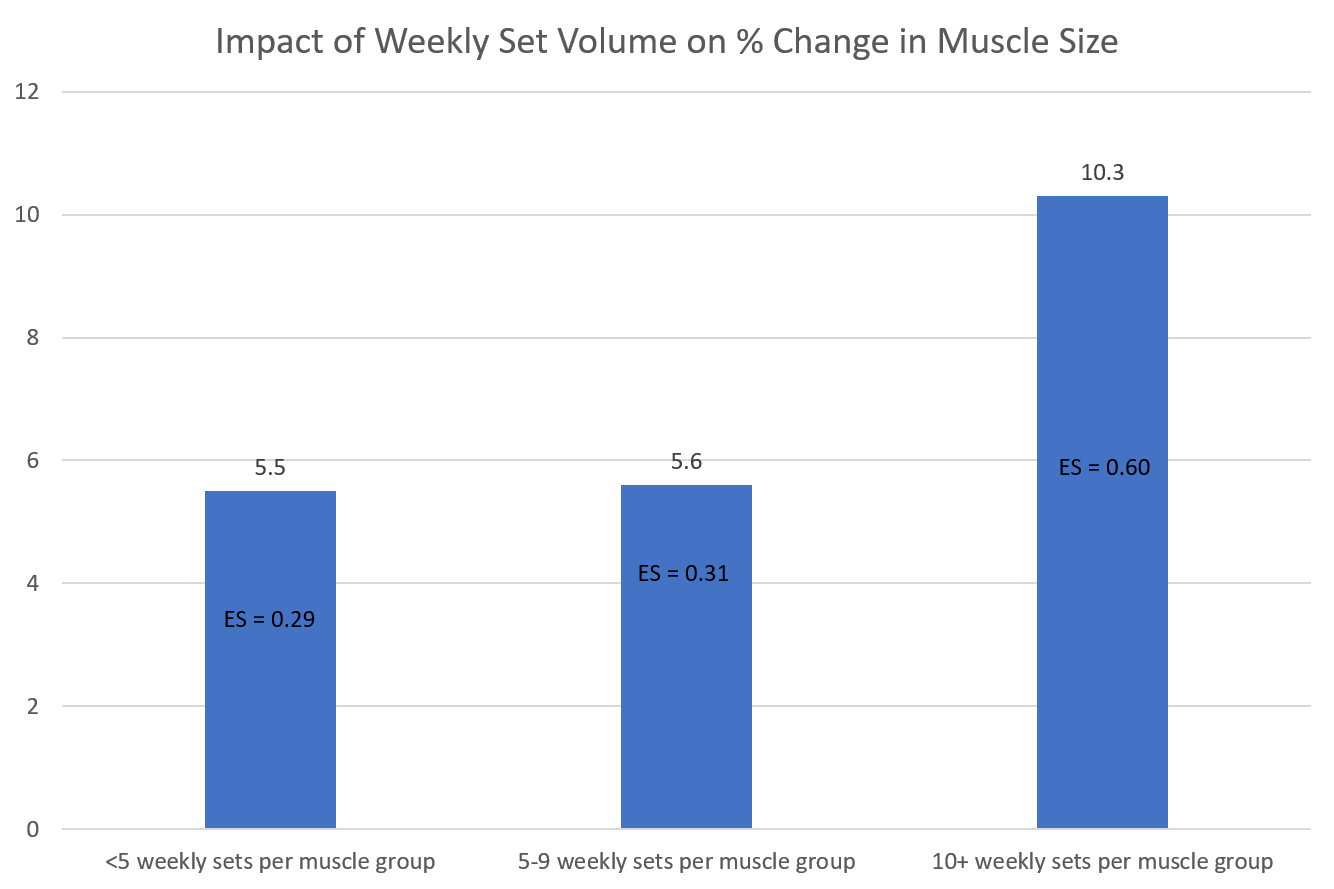
We also divided weekly volume into less than 9 sets, or 9+ sets. Again, the higher volume was better.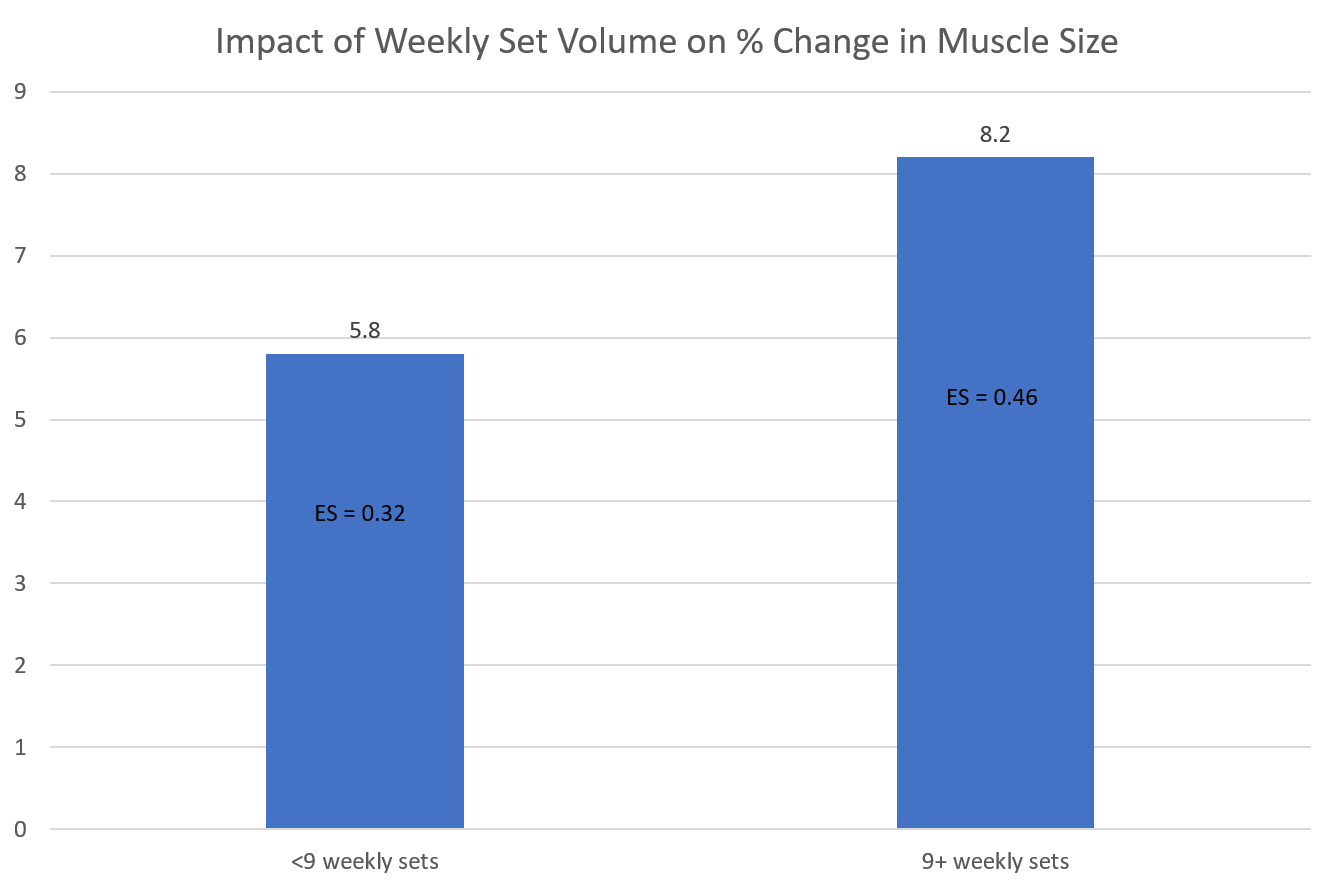
Finally, here is a forest plot of all the studies included in the analysis. A forest plot tells you whether high volume or low volume was favored in each study. If a dot is to the right of the center line, it means that study tended to favor high volume. If it's to the left, it tended to favor low volume. The further to the right or left, the stronger the effect. The size of each dot represents the weight of the study in the analysis; studies with larger sample sizes get more weight. You can see that nearly all of the studies are to the right of the center line, indicating most studies favored high volume. Some are dramatically to the right of the line. In fact, only one study is to the left of the line. This is consistent with an impact of training volume on hypertrophy. If there was no impact of volume, then studies would be more randomly distributed around the center line, with some studies to the left, some to the right, and some on the center. However, this is clearly not the case. The average across all the studies is represented by the large black diamond at the bottom, which you can see favors higher volume.
 Diving Deeper
Since that meta-analysis was published, there is much more existing data on the impacts of set volume on hypertrophy. Let's do some updated meta-analyses and deeper dives into recent studies and see what we find.
Problems With Previous Meta-Analytic Approaches, and the Inverted U Hypothesis
In my previous meta-analysis that I published with Brad Schoenfeld, I had classified volumes within each study as "higher" or "lower." Given there are now a fair number of studies using 3+ different levels of volume in the same study, it's no longer appropriate to classify volume in such a way. It's also not appropriate because, if there is a maximum volume ceiling per training session, then dividing volume this way could mask this effect. In other words, if I were to use this classification, some studies might show higher volume to be better than lower volume, but others might show higher volume to produce a regression in performance. When aggregated together, it would suggest there is no benefit to variations in volume. However, if the latter study used a very high per-session volume that would exceed the theoretical per-session threshold, while the former study did not, it would be misleading to aggregate them together.
For example, let's say study #1 compares 9 weekly sets to 18 weekly sets, divided into three times per week. That's 3 versus 6 sets per session. Let's say study #1 shows a benefit to the higher volume.
Study #2 comes along and compares 9 weekly sets to 18 weekly sets, but only trains once per week. That's 9 versus 18 sets per session. Study #2 shows a benefit to the lower volume.
If I were to aggregate study #1 and study #2 together, they would appear to cancel each other out. Both compare 9 to 18 weekly sets, but show the opposite results. However, the two studies utilized different frequencies; it's very possible that study #1 showed a benefit because the per-session volume was fairly low, and study #2 showed the opposite because the per-session volume became excessive in the highest volume condition.
Thus, the previous approach I had used for meta-analysis (comparing higher versus lower volumes in each study in a binary fashion, or performing a meta-regression while ignoring frequency) is not a good approach. A better approach is to examine whether there is an interaction between volume and frequency. If there is, then it would indicate it is better to look at training volume on a per-session basis, rather than a weekly basis.
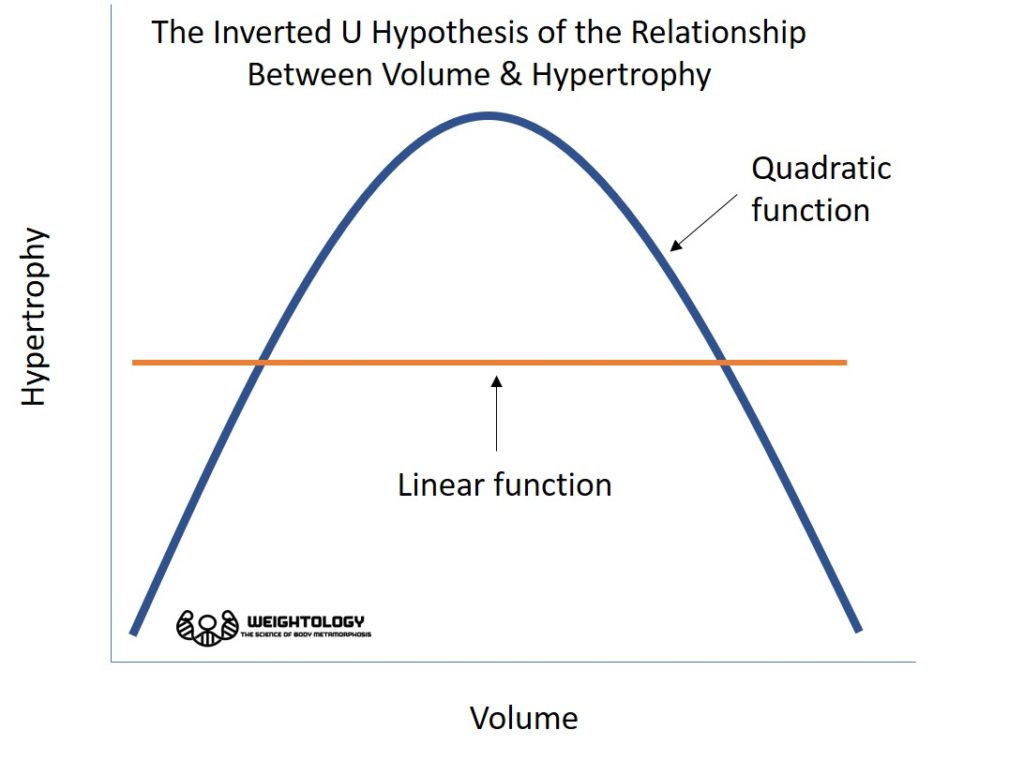
Another problem with my previous approaches is that my statistical models tested for a linear relationship between volume and hypertrophy. However, this doesn't effectively test the inverted U hypothesis of training. The inverted U hypothesis suggests that hypertrophy would decrease if training volumes became excessive.
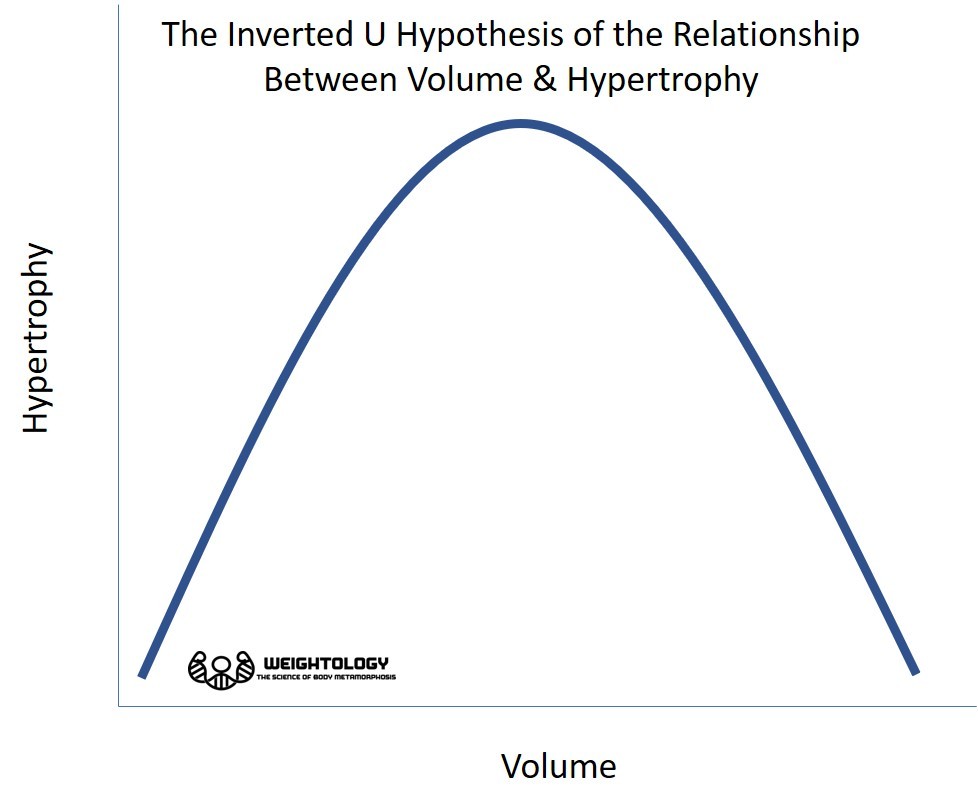
If we were to test the inverted U hypothesis with a simple linear function, it would suggest a flat line and no relationship between volume and hypertrophy. However, this is simply due to the use of the wrong model. A more appropriate model would be a quadratic function.
It's also possible that there isn't really a regression at higher volumes, but more of a plateau or perhaps just slight regression. In this case, an inverted U or quadratic function isn't appropriate. For example, perhaps our model needs to reflect that there's a rapid increase in gains as you increase volume in the low end, with diminishing returns in the higher
end. For example, rodent muscle protein synthesis data shows a rapid initial increase followed by diminishing returns and a slight
regression.
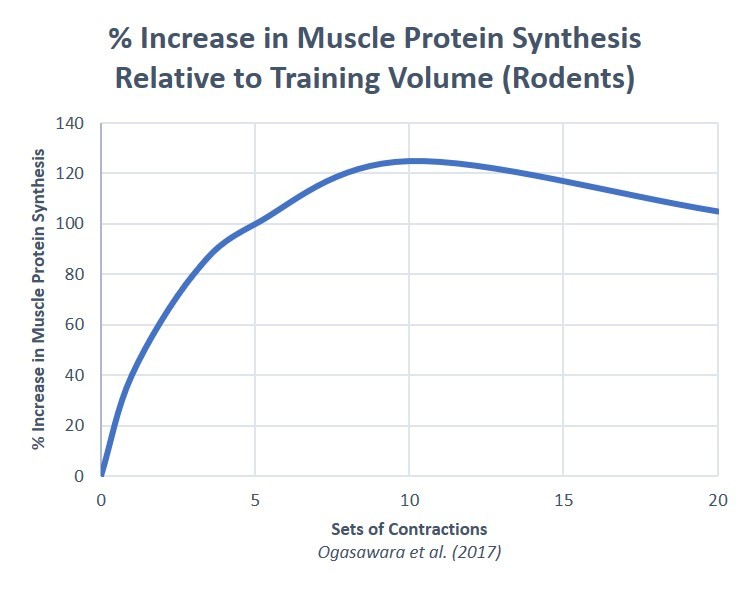
In this case, a logarithmic relationship is probably the best, or perhaps a logarithmic relationship for early set volume and a flat or slightly declining linear relationship for very high volumes.
Getting Technical
Here's what I did. Now, this section is a bit technical, so you can skip it if you don't care about methodology.
An effect size for each outcome was created by calculating the post-test mean minus the pre-test mean, divided by the pooled pre-test standard deviation. For example, if there were three levels of volume, then the pre-test standard deviation was pooled across all three levels. I analyzed the data using what is called robust variance random effects modeling for multilevel data structures. This probably sounds like a bunch of statistical gobledygook to you, so I'll explain it in laymen's terms. Basically, when you have a study, you can often have multiple outcomes from the same study (like quadriceps and biceps data). You have to account for the fact that those outcomes will be correlated, since they're from the same study (you can't treat them as independent). This is where the "multilevel data structures" comes in; my stats help account for this. Also, a "random effects" model, in laymen's terms, essentially means that I can't account for every possible source of variance between different studies, and that the "true" effect of volume may vary somewhat randomly (rather than be a single value), so I need to incorporate that uncertainty into my stats.
Now, each study is not weighted the same. Obviously, a study with a larger sample size (and hence more precision) should get more weight in the analysis. So, each outcome was weighted by the inverse of its variance (i.e., less variance = more precision = more weight).
Unlike my previous iterations of the analysis, I primarily ran set volume as a continuous variable. I took per-session volume and fit linear, quadratic, and logarithmic functions to the data to determine the best fits. Also, because rest intervals may impact the relationship between volume and hypertrophy, I ran separate analyses for studies using long rests (2+ minutes) and short rests (<2 minutes). I used meta-regression to analyze the data.
Meta-Regression Results
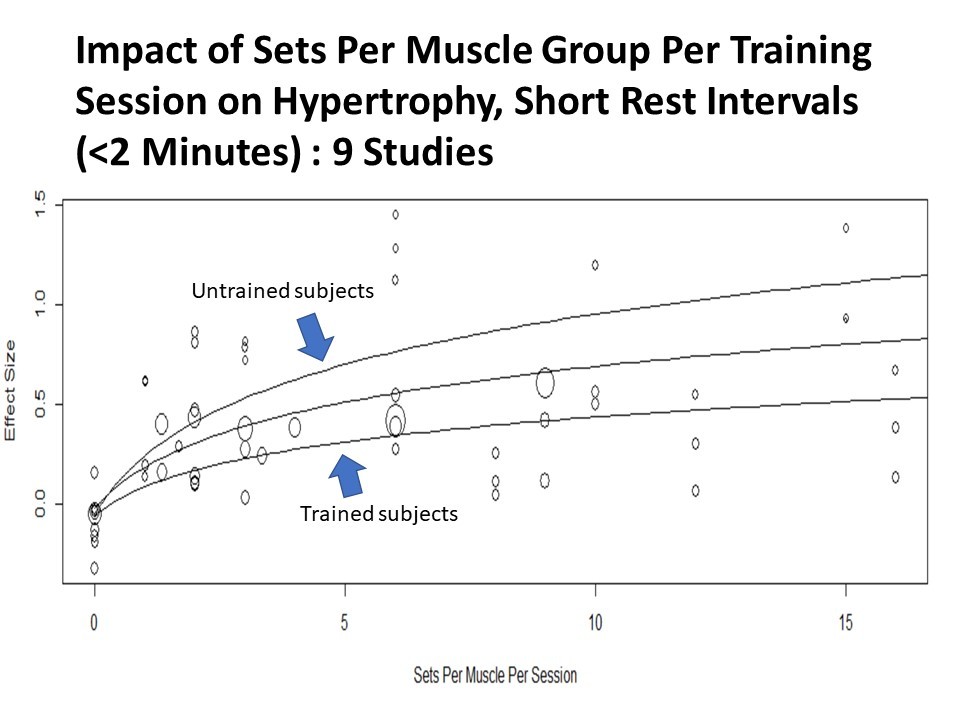
With short rest intervals, hypertrophy increased with increasing volume up to 15-16 sets per session, albeit with diminishing returns. This was true for both trained and untrained subjects.
For long rest intervals, a breakpoint model fit the data best, with a combination of a logarithmic curve and a straight line. This model showed hypertrophy to increase up to 6 sets per muscle group, followed by a very gradual regression after that. None of the studies with untrained subjects exceeded 6 sets per muscle group per session, and there were very few data points with less than 6 sets in trained subjects. Thus, I haven't separated it out by trained and untrained subjects, although an analysis of specifically trained and untrained subjects yielded curves with coefficients (the "multiplier" in an equation or model) similar to the combined data.
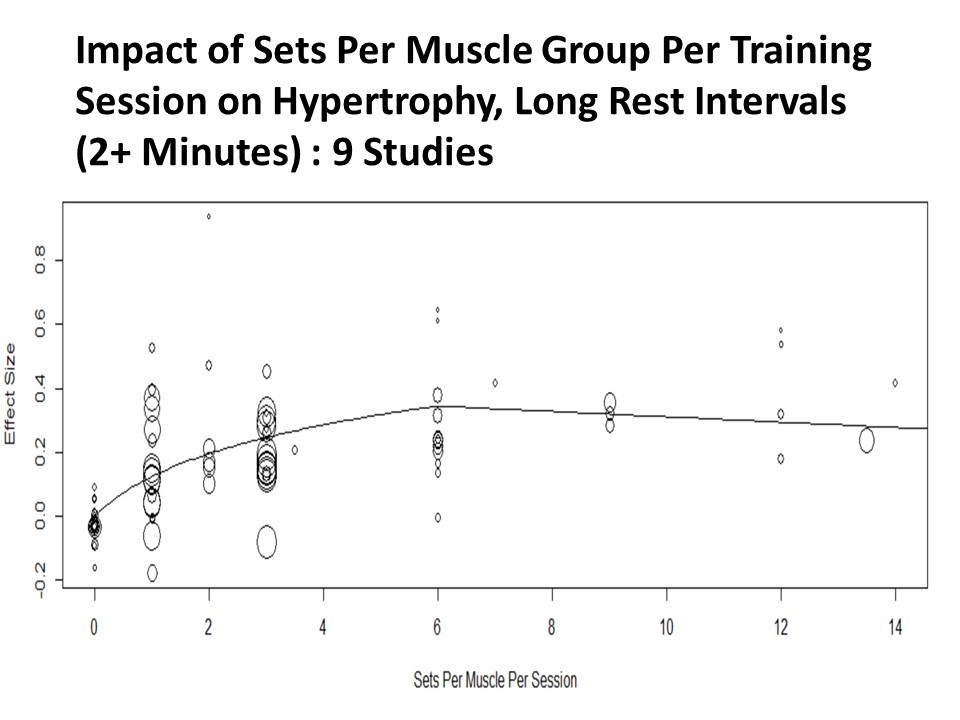
This data would suggest that, with long rest intervals, gains level off or maybe even regress beyond an average of 6-8 sets per muscle group per training session. I stress average here because there's data showing that individuals may deviate substantially from this.
Interestingly, the concept of an upper limit of effective volume of around 8 sets in a single training session when using long rest intervals is supported by the muscle protein synthesis data described earlier in this article, where muscle protein synthesis appeared to plateau somewhere in the 8-12 set range.
You can also see how rest intervals impact the upper limits of training volume. With short rest intervals, you have to do approximately twice as many sets per session as with long rest intervals to maximize gains. For a more detailed analysis on this, check out this Weightology research review.
Summarizing the Meta-Regression Results
Overall, this data suggests a threshold of somewhere around 6-8 sets per muscle group per training session when using long rest intervals. You may have to do approximately double this amount when using short rests.
- There appears to be an upper limit on of training volume per session, where higher volumes beyond a certain level become "junk volume" and no longer become effective. This indicates that the "bro-style" of training each muscle group once per week, blasting each muscle with up to 20 sets per body part or more, may be an inferior way to train. If you're training above 8 sets per muscle group per session, you may get some benefit of splitting your volume up into more frequent sessions. However, this may vary between individuals.
- You might think that this contradicts information from the Frequency Bible, where there was little difference between training frequencies on a volume-equated basis. However, the vast majority of studies did not exceed 10 sets per session. Only two studies involved a frequency where the per-session volume greatly exceeded 10 sets. Zaroni and colleagues compared 15 sets per session, done once or twice per week, to 3-6 sets per session, done five times per week. Hypertrophy was superior in the higher frequency condition. Brigatto and colleagues compared 16 sets per session, done once per week, to 8 sets per session done twice per week. Hypertrophy was similar between the conditions. However, improvements in training load volume were superior in the higher frequency group. This would suggest that, if the study had been carried out over a longer period of time, that greater hypertrophy may also have followed in the higher frequency condition. Thus, training frequency likely doesn't make a difference when the per-session volume is less than around 10 sets. However, if it greatly exceeds 10 sets, then it may be more beneficial to split the volume into a higher frequency.
It's also important to note that, in the previous graph, there is a lot of variance. Within any given set volume, there is a huge range in effect sizes. For example, with a per-session volume of 6 sets per muscle group, effect sizes range from around 0 to around 1.5. This demonstrates why one should be wary of drawing too much conclusions from one study when it comes to set volume and hypertrophy; different studies with the same set volumes per session can have widely different results. This also shows why meta-analysis and meta-regression are so important; it allows you to assess the overall trend.
Finally, I can't stress enough that these are very rough averages. Just because the average across studies suggests a 6-8 set per muscle group ceiling with long rests, doesn't mean that's true for all individuals. Some individuals may have volume ceilings much higher than this. For example, in this study that I reviewed in my research review, some subjects had volume ceilings up into the 30+ weekly set range. They trained twice per week, so some subjects had volume ceilings roughly double the 6-8 set ceiling, even when training with longer rests. However, the averages in that study didn't show much benefit beyond 20+ weekly sets. This is why averages can be misleading. Averages can be a starting point when it comes to program design, but don't treat them as a holy grail.
Volume and Strength
In the original version of this guide, I used some strength data by Marshall et al., Ostrowski et al., and Baker et al. to make some inferences about the dose-response effect of volume on hypertrophy. I assumed a strong relationship between strength and size gains in trained individuals, and used the strength gains in those studies as a proxy for hypertrophy. However, as I've written in the Progression Guide, the relationship between strength and size is not as close as once thought, even in trained subjects. In fact, in a recent study that I was a co-author on, there were no differences in 1-RM bench or squat gains between three levels of volume (1, 3, and 5 sets per exercise) in trained subjects. This is despite the fact that there was a graded dose response in hypertrophy. There was also no correlation between strength gains and size gains in that study. The following charts show the strength gains and muscle thickness gains; you can see no difference in 1-RM or endurance gains, but a graded dose response in three out of the four muscle groups tested.
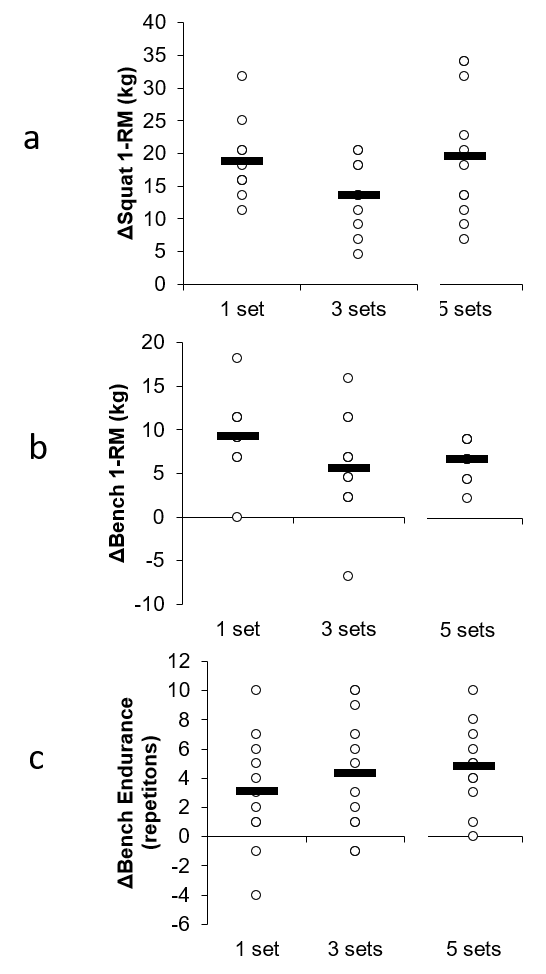
Impact of Volume on 1-RM and Endurance Gains (1, 3, or 5 sets per exercise)
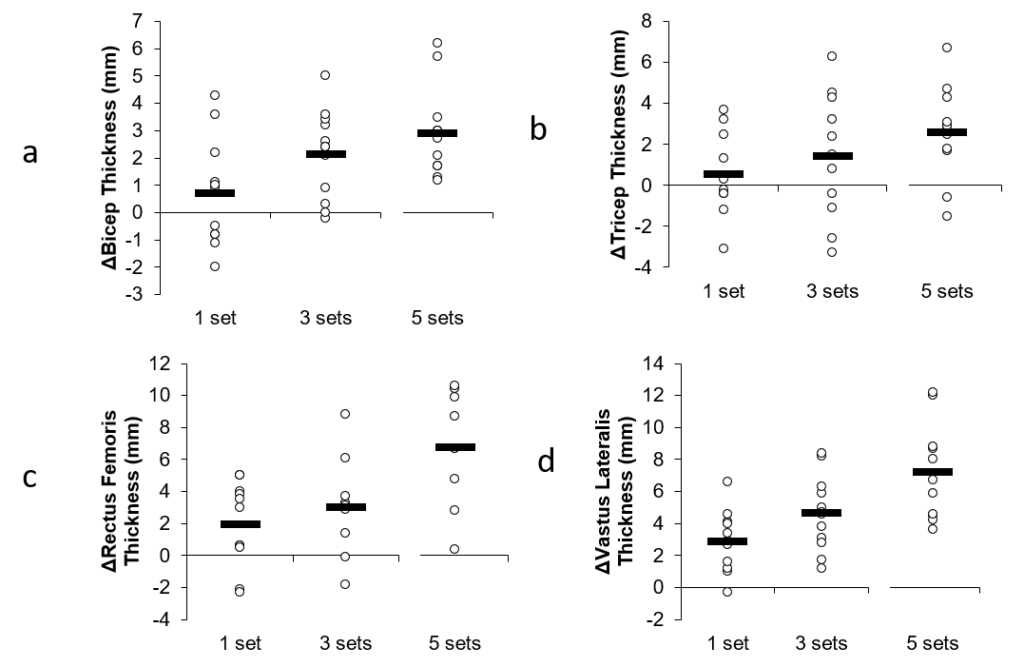
Dose-Response Impact of Volume on Hypertrophy (Sets Per Exercise)
Thus, strength data cannot be used to make inferences about the impacts of volume on hypertrophy.
How Much Is Too Much?
In the original version of this guide, I had suggested that an optimal volume lie in the 12-18 weekly set range, and that weekly set volumes of 20+ likely would not result in further gains. This was based on the following observations:
-
- In the study by Ostrowski and colleagues on trained subjects, the triceps were subjected to either 7, 14, or 28 weekly sets. Gains nearly doubled moving from 7 to 14 weekly sets, but there was no further increase with 28 weekly sets. Also, bench press performance dropped off with that level of volume. This suggested that perhaps weekly volumes in the high 20's may be more than necessary. However, one limitation of this study, which I did not address in the original version of the guide, is that the researchers did not assess bicep gains. They also did not do anything beyond 12 weekly sets for quadriceps. Thus, this study is insufficient for determining where an upper limit may lie, as only one muscle group was trained for more than 20 weekly sets. It's also important to note that the training frequency for triceps in this study was two times per week. Thus, the 28 weekly set condition involved 14 sets per session, exceeding the approximate 10-set per session threshold that we established earlier. Thus, the observed plateau in this study may be due to the frequency.
- In the study by Ostrowski and colleagues on trained subjects, the triceps were subjected to either 7, 14, or 28 weekly sets. Gains nearly doubled moving from 7 to 14 weekly sets, but there was no further increase with 28 weekly sets. Also, bench press performance dropped off with that level of volume. This suggested that perhaps weekly volumes in the high 20's may be more than necessary. However, one limitation of this study, which I did not address in the original version of the guide, is that the researchers did not assess bicep gains. They also did not do anything beyond 12 weekly sets for quadriceps. Thus, this study is insufficient for determining where an upper limit may lie, as only one muscle group was trained for more than 20 weekly sets. It's also important to note that the training frequency for triceps in this study was two times per week. Thus, the 28 weekly set condition involved 14 sets per session, exceeding the approximate 10-set per session threshold that we established earlier. Thus, the observed plateau in this study may be due to the frequency.
-
- In the original guide, I mentioned the German Volume study that I reviewed in a past research review. In this study on trained subjects, 24 weekly sets was not more effective than 14 weekly sets for quadriceps, and 28 weekly sets was not more effective than 18 weekly sets for biceps and triceps. However, it should be noted that many of these sets were not to failure. German Volume Training involves doing 10 sets of 10 with 1 minute rest, and you use the same weight for all sets. The subjects started with 60% 1-RM on most exercises. In many cases, people can do around 20 reps with 60% 1-RM (this will vary from one person to the next). This means that early sets were well short of failure; in fact, many of the early sets will fail to accumulate very many hypertrophic reps. Remember that, in this guide, we're defining volume as the number of "hard" sets to failure or near failure. In this study, the subjects were not doing 14-28 hard sets. In fact, it's difficult to ascertain how many hard sets the subjects did. Also, it likely varied from one person to the next since it was based on % 1-RM, rather than doing sets to a specific Reps In Reserve (RIR). In other words, one person might be able to do a lot more reps than another person with 60% 1-RM, so their initial sets will be much easier. Thus, this study is not a reliable data point for determining where an upper limit may lie. The same holds true for another 2018 German Volume Study; the methodology was nearly identical, and it again is not reliable for determining an upper limit for volume. It should also be noted that the training frequency was twice per week for upper body, and once per week for lower body in this study. Thus, the highest volume condition was doing 24 sets per session for lower body, greatly exceeding the theoretical 10-set limit. This group was doing 14 sets per session for upper body, again exceeding the theoretical 10-set limit. Thus, the training frequency and per-session volume may also be contributors to the lack of volume effect observed in this study.
- There is a study by Baker and colleagues that examined strength, not hypertrophy. In this study, 36-45 weekly sets did not improve strength over 12-15 weekly sets in trained subjects. However, gains in strength may not be a good proxy for hypertrophy, even in trained subjects. This might be particularly true in a study like this, where the cumulative fatigue from the very high training volume (36-45 weekly sets) might mask any hypertrophy-related strength gains. Thus, this study may not be a reliable data point for determining an upper limit for set volume.
Finally, a study performed was performed on high volume training by Haun and colleagues. Training lasted for 6 weeks. Subjects started 10 sets per exercise per week (split into three sessions per week), with approximately one compound exercise per muscle group (squat, bench press or overhead press, SLDL and lat pull). Subjects did 10 reps per set at approximately 60% 1-RM; the average Reps In Reserve (RIR) was around 4. Set volume was progressed each week, so that subjects were doing 32 sets by week 6. Lean mass (assessed via DEXA) significantly increased by 2.2 kg by the end of the study. The researchers used bioelectrical impedance spectroscopy (BIS) to estimate the amount of intracellular vs. extracellular fluid, and subtracted the extracellular fluid amount from the DEXA lean mass to estimate how much tissue gain was "true" tissue gain, versus extracellular water (which might be considered edema or swelling from the high training volume). The researchers found that, while lean mass continued to increase with progressively higher volume, there was no longer a significant increase in lean mass from the midpoint of the study to the end when the results were corrected for extracellular water.
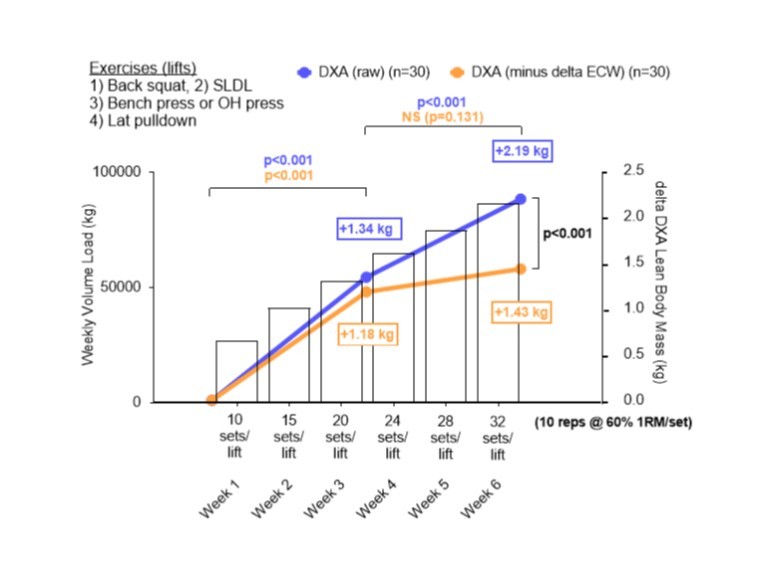
This study has been used as evidence to indicate anything beyond 20 weekly sets isn't effective for hypertrophy. However, there are a number of problems with this conclusion:
- The changes in ultrasound-derived muscle thickness (a direct measurement of hypertrophy) were less than 1 mm and were not statistically significant, suggesting that there was very little hypertrophy that occurred in terms of muscle thickness in the muscle groups assessed via ultrasound (vastus lateralis and biceps). Average muscle fiber area also did not significantly change. This brings up whether the DEXA data reflects "true" hypertrophy in any way. Now, this doesn't mean there wasn't any true hypertrophy in this study. The increases in DEXA derived lean mass were fairly large. You can sometimes get increases in muscle size, assessed via cross-sectional area, without a corresponding increase in muscle thickness, as measurements of muscle thickness are done at a very specific point in the muscle. It's possible that this happened in this study. The increase in lean mass via DEXA was not statistically significant, although it did heavily favor an increase (the confidence interval ranged from -0.97 to 5.35). The BIS data showed an increase in total body water. This suggests the increase in DEXA lean mass was associated with an increase in body water, which is not always reflective of actual muscle tissue gain (although keep in mind that muscle itself contains mostly water, so this doesn't rule out muscle growth as a factor). Overall body mass tended to go in the same direction as the DEXA lean mass data, although not statistically significant. There are a number of possibilities for this study. There could have been an increase in muscle size that wasn't adequately captured by the muscle biopsy or thickness data. Another possibility is that the subjects may have been slightly overfeeding. Overfeeding alone can increase lean mass in the absence of training, although it also usually accompanied by fat gain. It is possible that, if the subjects were slightly overfeeding, it was enough to impact lean mass without significantly impacting body fat, especially given that the subjects were training. However, such an increase in lean mass would not be "true" muscle, and rather simply an increase in body water. A third possibility is fluid accumulation that is not related to increases in muscle tissue.
- Weights were 60% 1-RM, which can be as far as 10 reps away from failure depending upon the individual. The average RIR for all sets was around 4; in some cases it came near 5. Remember that this is the average, meaning that some sets were performed with a much higher RIR while others were performed with less. It should also be noted that the accuracy of RIR tends to fall off the further away you get from failure. Thus, subjects were training fairly well short of failure for a number of sets, and thus some sets don't fall into the "hard" sets category. There may have also been errors in their estimates for RIR. This makes it difficult to know the number of "hard sets".
- The use of BIS to estimate changes in ECW and ICW in healthy individuals, specifically as a marker of edema in muscle, has not been validated. In fact, there is no data to indicate that subtracting the BIS-derived ECW from the lean mass in DEXA is valid for distinguishing muscle edema from other types of lean mass changes.
A final note is that upper limits on training volume will also depend upon the individual. While there may be, on average, an upper limit of around 6-8 sets per session or 12-24 weekly sets when using long rests, individuals may differ substantially from the average. In this study that I reviewed in my Research Review, some individuals had benefits of 15+ sets per session or 30+ weekly sets, even with long rests. This was despite the average not showing much benefit beyond 20+ weekly sets. Thus, averages are only a very rough guide for programming.
High Volume Training: Dose-Response Studies
Let's take a closer look at the dose-response studies that involved very high weekly set volumes.
- In the study by Raedelli and colleagues, the researchers compared 1 set, 3 sets, and 5 sets per exercise, done three times per week. Sets were performed for 8-12 reps to failure, with 1.5 - 2 minutes rest. The subjects performed bench press, leg press, lat pull down, leg extension, shoulder press, leg curl, biceps curl, crunch, and triceps extension. If you count the pushing movements towards tricep volume, and the pulling movements towards bicep volume, the total weekly volume for each muscle group was 9, 27, and 45 for triceps, and 6, 18, and 30 for biceps. The study was carried out over a 6 month period, and was performed on untrained subjects. It was one of the most well-controlled studies on volume, given that it was performed on Brazilian Navy cadets confined to an aircraft carrier. Also, it was carried out for 6 months, compared to the usual 6-12 weeks of other studies. Here are the percentage gains for each muscle group and each volume level:
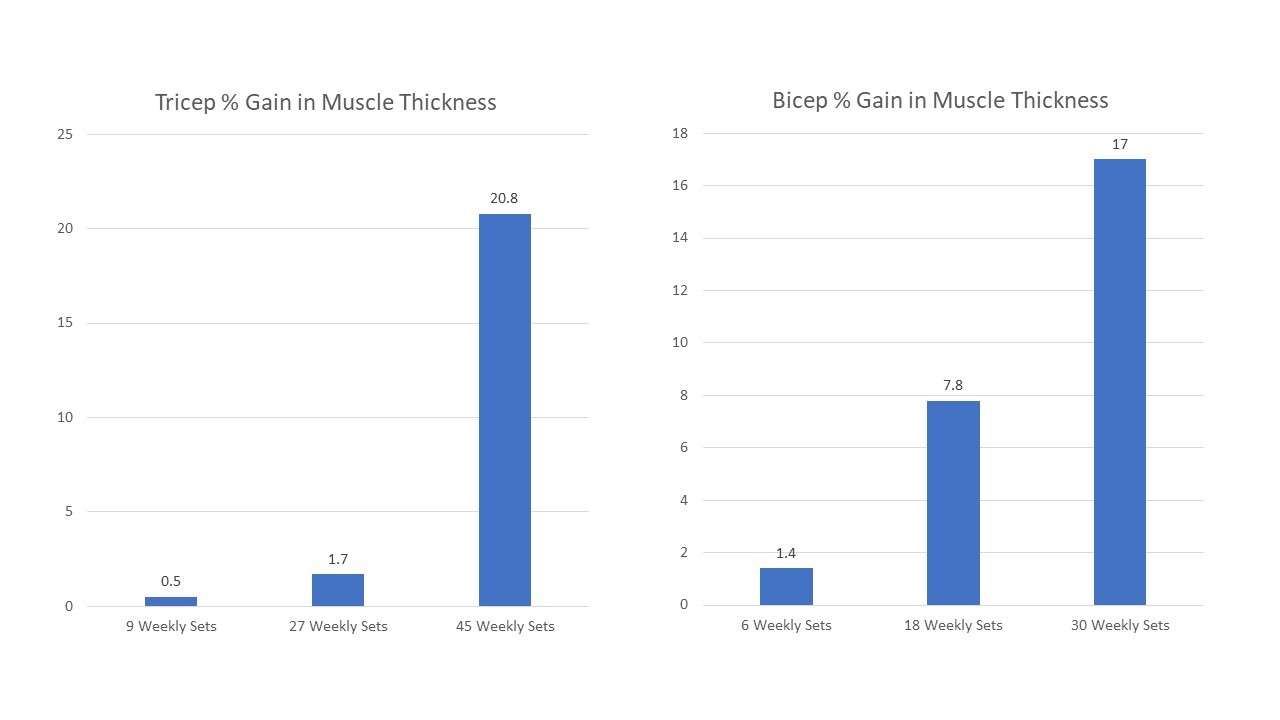
There was a clear dose-response effect in terms of volume in this study, especially in the biceps. In fact, the gains in muscle thickness observed with 30-45 weekly sets were 3-4 times what is typically seen in studies (most studies show around a 5% increase in muscle thickness). Now, one odd result of this study was that there was hardly any increase in tricep muscle thickness for a volume of 27 weekly sets. This is at complete odds with other studies that show significant gains in tricep thickness with much lower volumes in untrained subjects. The sudden jump to nearly a 21% gain at the highest volume is also very strange. However, this does not invalidate the study; as I've written elsewhere, you can get odd results like this from random chance alone. Overall, the study did support an effect of volume, and no plateau was observed for weekly set volumes of more than 20. It should also be noted that the researchers examined fat-free mass gains. There were no significant differences between groups in fat-free mass gains; however, this data is likely not reliable since it was assessed using skinfolds, which are not a reliable technique for assessing changes in fat-free mass. Also, the control group showed a significant increase in fat-free mass; this indicates potential error in the measurements as you would not expect the control group to show an increase.
- In a study of which I was a coauthor, Brad Schoenfeld and colleagues replicated the design of the Radaelli study, but with trained subjects. The subjects performed 1, 3, or 5 sets per exercise, for 8-12 reps to failure and 1.5 minute rests. They trained 3 times per week for 8 weeks. One difference from Radaelli, other than the length of the study, was that nearly all movements were compound movements (bench press, military press, lat pull, seated row, squat, and leg press; the only isolation movement was leg extension). Total weekly sets were 6, 18, and 30 for biceps and triceps, and 9, 27, and 45 for quadriceps. A significant dose-response effect was observed in the biceps, rectus femoris (part of the quadriceps), and vastus lateralis (part of the quadriceps). There was not a significant effect for triceps, although the overall pattern had similarities to the other muscles.
The big strength of this study was that it was mostly a replication of another study, and the results were similar. Replication is an important concept in science; when independent research groups can replicate results, it gives more credence to the findings. This study, along with Radaelli, provide evidence that the upper limit for weekly volumes may be higher than previously thought. You can also see the dramatic variation in how people respond to any given volume. For example, in the low volume groups, some people had higher gains in muscle thickness than some of the people in the highest volume groups.
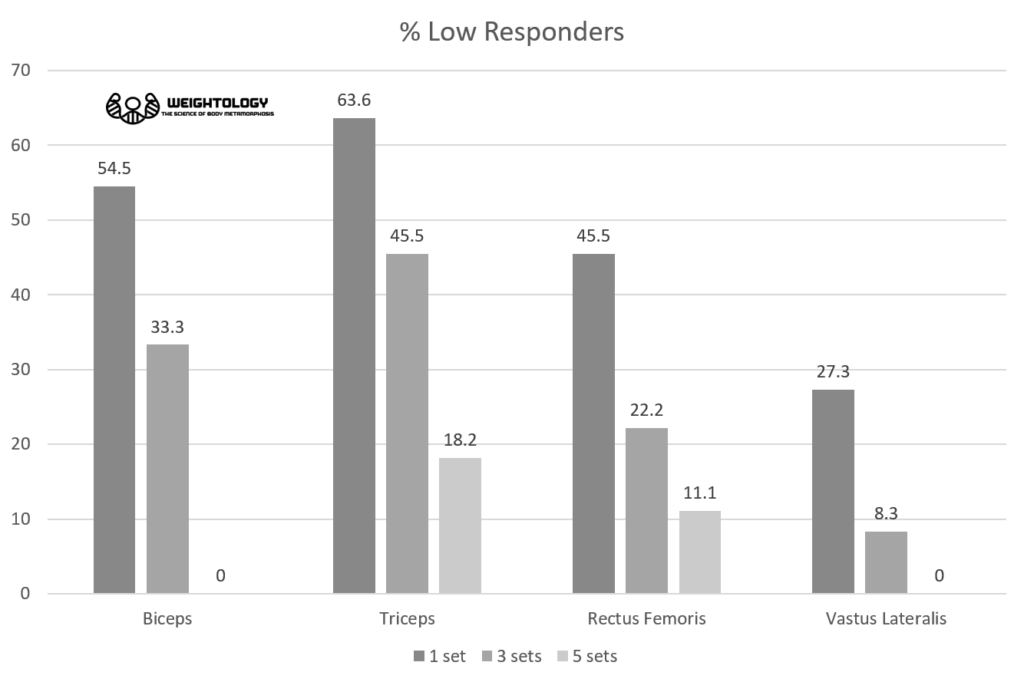
If we classify subjects into "low responders" based on whether they met the "smallest worthwhile change" (which is at least 0.2 standard deviation units, or a "small" effect size), then the percentage of low responders decreases as you increase volume. In fact, there were very few low responders in the highest volume condition.
The same holds true for high responders (define as improving by at least 0.8 standard deviation units, or a "large" effect size). As volume increased, the percentage of high responders also increased.
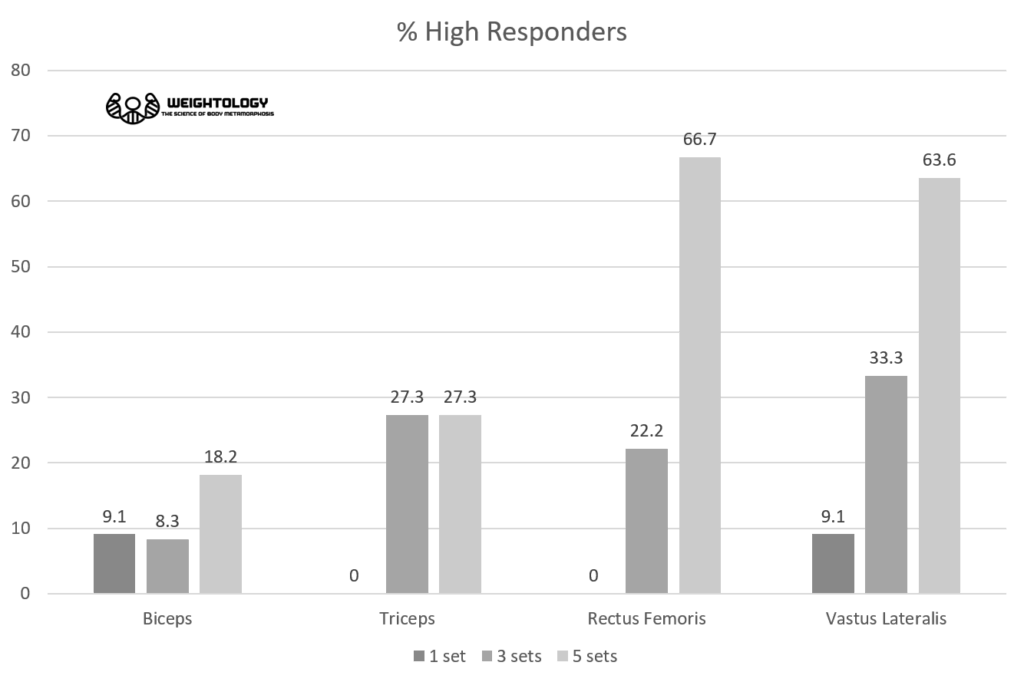
This data would suggest that, for people who are "hardgainers", an increase in volume may be necessary. This is at odds with the conventional wisdom that hardgainers require less volume and more recovery. However, this data is in agreement with research on endurance training, where non-responders do show a response when subjected to more volume. Now, there are some limitations to this type of analysis. The percentage of responders could be a totally random phenomenon; if you were to replicate this study, you might end up with no apparent responder/non-responder effect.
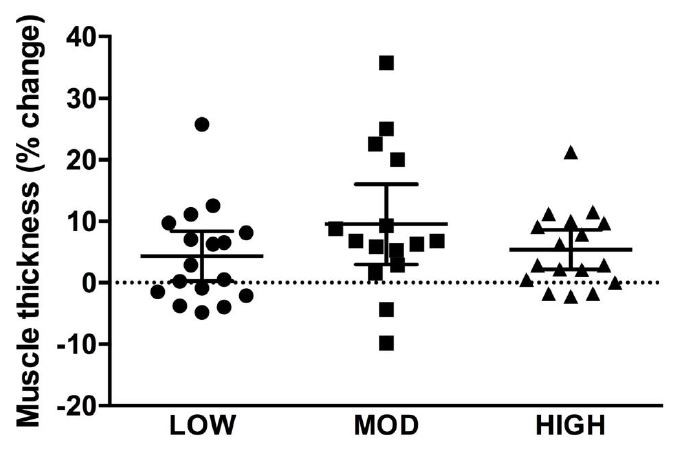
- Heaselgrave and colleagues explored the impact of 9, 18, or 27 weekly sets on biceps thickness, isometric strength, and 1-RM strength. Trained males were allocated to a low volume, moderate volume, or high volume group. The low volume group performed 9 sets targeting the biceps once per week. The moderate and high volume groups performed 9 or 13-14 sets per session, twice per week. Exercises were seated supine biceps curl, supine grip bent over row, and supine grip pulldown. The low and moderate volume groups did 3 sets of each exercise. The high volume group did 4-5 sets of each exercise. Subjects performed each set for 10-12 reps, aiming for 2 Reps In Reserve (RIR). Rest periods were 3 minutes between sets. There were no significant differences between groups in changes in 1-RM strength or biceps thickness, although isometric strength only improved in the highest volume group. While there were no significant differences in changes in bicep thickness, the magnitude of the percentage gain tended to favor the moderate group over the other groups (9.5% versus 4.3% or 5.4%). Judging by the individual data, it appears there were more high responders in the moderate group, as well as less non-responders.
One limitation of this study was that subjects were allowed to train outside of the study. While the researchers asked the subjects not to do any sort of pulling or bicep movements, and while the subjects did record their own training journals outside the study to ensure this wasn't happening, it can't be ruled out that they may have been doing some other pulling or bicep work. Another limitation is the short duration of the study (6 weeks); it is the shortest study among all the dose-response studies on volume. It is possible that longer durations could show differences; for example, one study found no significant difference in hypertrophy between 12 and 4 weekly sets after 6 weeks, but did show a difference after 20 weeks. A third limitation is that the groups used different frequencies; the low volume group trained biceps once per week, while the other two groups trained biceps twice per week. While frequency does not appear to impact hypertrophy much on a volume equated basis, it may impact hypertrophy when weekly training volumes become high as I pointed out earlier in this article.
- Ostrowski and colleagues examined the effects of 1, 2, or 4 sets per exercise on hypertrophy in trained subjects. The study lasted for 10 weeks. Subjects did 7-12 reps to failure per set, with 3 minute rests between sets. Each exercise was performed once per week. Triceps were trained twice per week, as pressing movements were performed on one day, and isolation movements were performed on another day. Only triceps and quadriceps hypertrophy were assessed. Quadriceps training volume did not exceed 12 total weekly sets since they were only trained once per week. However, triceps weekly volume, when counting pressing movements, was 7, 14, and 28 for the low, moderate, and high volume groups, respectively. There were no significant differences in changes in triceps thickness between the groups, although the percentage gains and effect sizes favored the groups doing 14 and 28 weekly sets. In fact, percentage gains and effect sizes for 14-28 weekly sets were about twice that of 7 weekly sets. There was little difference between 14 and 28, however.
- I no longer consider the Barbalho studies (here and here) as reliable studies. One of the studies has been retracted. I will have more info on the other one in the future. They are not included in this review or in any of the meta-regression analyses.
- Aube and colleagues looked at the impacts of 12, 18, or 24 weekly sets on hypertrophy in quadriceps of trained subjects. They didn't find a dose-response relationship. There was no significant differences in hypertrophy between the weekly volumes. For a detailed analysis of this study, check out my research review article on it.
- Brigatto and colleagues looked at the impacts of 16, 24, or 32 weekly sets on hypertrophy in trained subjects. They did see a dose-response relationship, with increasing hypertrophy up to the highest volumes. For a detailed analysis of this study, check out my research review article on it.
Why are there differences in the outcomes of these dose-response studies? Three show a benefit to very high weekly volumes (two of which had very similar study designs), while three do not. There are a number of potential explanations for this:
- Random chance. As I have written about here, you can get different results in training volume studies due to random chance alone, even if study designs are identical (which in this case, they are not). This is especially true when you have small sample sizes (most resistance training studies don't have more than 9-20 per group), and you're measuring something that shows tremendous variance from one person to the next, like hypertrophy. In that article, I did a statistical simulation of 5 different studies that sampled from populations that showed a graded dose-response effect of volume on hypertrophy. The studies all had different outcomes, as you can see in this set of charts:
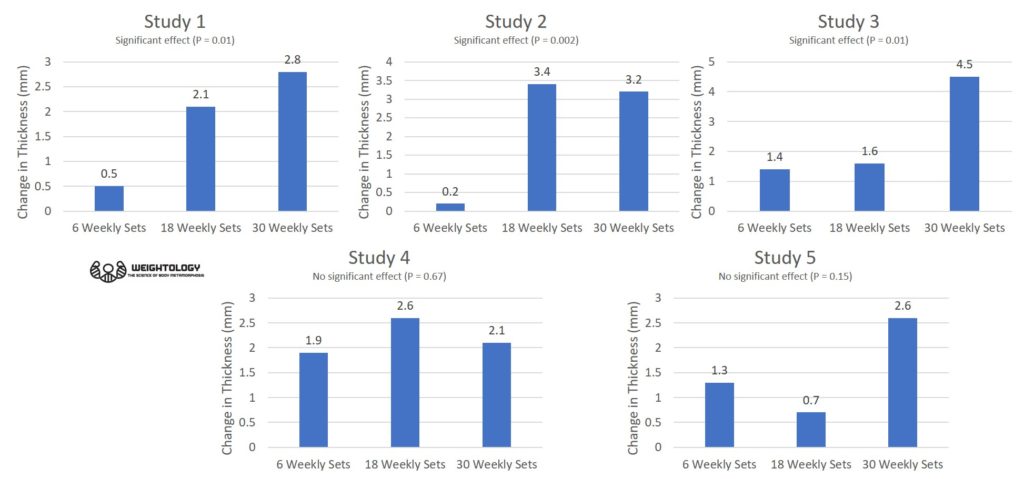
Thus, it's possible that one factor behind the different results of these studies are due to random chance, or a combination of random chance and different study designs. This is why meta-analysis and meta-regression become important.
- Short vs. Long Rest Intervals. The three studies showing a graded dose-response relationship up to very high volumes involved short rest intervals of around 90 seconds or less. The studies that showed a plateau at lower volumes had rest intervals of 2+ minutes. Longer rest intervals usually result in more hypertrophy than short rest intervals for the same number of sets. This appears to primarily occur with compound movements, and central fatigue may be a mechanism (although there is debate about this). The use of short rest intervals on compound movements may inhibit recruitment of high threshold motor units (which have the most capacity for hypertrophy) due to central fatigue. When you train with short rest intervals, you have to do more sets to make up for this. For a more detailed analysis of this, check out this research review as well as this one.
- Previous Training Programs. The training program a subject is on prior to participating in a study may impact the subject's response to the study. A subject who has already been training with high volumes may not have the same response as an subject who had been training previously with low volumes. Also, the size of the volume jump may impact gains. Differences among studies may relate to the types of programs subjects were on before embarking on the training, and which groups they were randomized to.
It is also possible that the differences between studies could be due to a combination of some or all of these factors.
Finding Your Individual Volume Ceiling
The guideline of 6-8 hard sets per muscle group per session is based on averages across multiple studies. As I mentioned before, individual volume ceilings may be substantially higher for some people. So how do you find your own volume ceiling?
One method is to use small increments in volume and use progress as a guide when to stop. Start with a low volume of training. When progress stops, increase weekly volume by 20%. For example, if you're doing 8 weekly sets (4 sets twice per week), increase it to 10 (5 sets twice per week). This should stimulate further progress. Once you hit a plateau, increase weekly volume again by 20%. If an increase in weekly volume of 20% fails to stimulate further progress, try one more 20% jump. If those two successive 20% jumps fail to stimulate further progress, then you've likely hit a volume ceiling for that muscle group.
What do you do when you've hit a volume ceiling and aren't progressing anymore? Volume cycling might be the answer.
The Theoretical Case for Volume Cycling
As mentioned earlier, the Schoenfeld volume paper showed an increasing number of responders with increasing volume. Similarly, the Aube study showed that the responders were primarily individuals who increased their training volume relative to what they were doing before. A third study by Bamman et al. showed that only 16% of the young subjects were non-responders at a volume of 27 weekly sets on quads. All together, this data would suggest that increasing set volume is an effective means to stimulate hypertrophy, especially if someone has reached a plateau and is not responding.
However, there is a limit to how much you can increase volume to achieve further gains. As suggested by the inverted U hypothesis, at some point gains will plateau or regress if volume becomes too high. Thus, at high training volumes, increasing volume is no longer an option once a plateau has been reached. In this situation, dramatically decreasing volume is likely the best option. This would theoretically have the following effects:
- It would allow cumulative fatigue to dissipate, resulting in the expression of new strength gains that may have been masked during the cumulative fatigue of the high volume period.
- It would allow for the maintenance of the new size gains, while simultaneously re-sensitizing the muscle to a future volume stimulus.
The amount of set volume needed to maintain size is much smaller than the amount of volume needed to increase size:
- In a study I reviewed here at Weightology, cutting volume from 24 weekly sets (3 times per week) to 8 weekly sets (2 times per week) for 8 weeks resulted in a maintenance of size gains in untrained men.
- In this study by Bickel et al., untrained subjects did 27 weekly sets to near failure on legs (3 exercises for 3 sets each, 3 times per week). Training went on for 16 weeks. This was followed by two different reduced training periods that lasted for 32 weeks. One group reduced volume by 1/3 (to 9 weekly sets), where training was reduced to only once per week. The other group reduced volume to 1/9 (3 weekly sets), where frequency was reduced to only once per week and set volume was reduced to one per exercise. The 1/9 volume condition maintained size in the young but not old subjects. Muscle size continued to increase in the young, but not old, subjects of the 1/3 volume group for 16 weeks, and then remained steady for another 16 weeks. Both conditions resulted in a maintenance of strength, if not slight improvement during the reduced volume phase.
- In a study on elderly men, subjects performed 9 weekly sets on legs (3 sets of leg extensions, 3 times per week) for 12 weeks. This was followed by a 12 week reduced training period where frequency was reduced to once per week (1/3 total weekly volume). Size and strength were maintained on the reduced volume.
- In a study I reviewed here at Weightology, lean mass was retained during 2 weeks of no training.
The concept of re-sensitizing a muscle to training is supported in a study I reviewed here at Weightology. In that study, subjects who took 3-week breaks from training experienced decreases in muscle size during those 3-week periods. However, when they returned to training, they gained muscle at a faster rate than subjects who had been training continuously until they caught up with those subjects. This indicates that the muscles of the subjects who took time off were sensitized to the training stimulus due to detraining, and experienced rapid regain (also often called "muscle memory"). But what would have happened if, rather than completely taking time off, the subjects simply had done a period of reduced training volume? We don't know, but we can speculate that perhaps the subjects might have maintained their size, and then when returning to full volume, might have increased at a faster rate than the subjects training at constant volume. However, this is purely speculative, and unfortunately there is no research that has examined this directly. There is at least some theoretical basis for it, though. Once the body adapts to a stimulus, you must provide more stimulus (volume in this case) to continue to produce adaptation. However, you cannot continue to increase the stimulus indefinitely. At some point, you need to make your body more responsive to the stimulus again, and the only way to do that is to reduce (but not eliminate) the stimulus. This will allow for maintenance of adaptations, while allowing the body to recover and become primed for a future increase in the stimulus.
It's also possible that gains may continue for a period of time during a reduction in training volume. In the study by Bickel and colleagues that I mentioned earlier, subjects continued to gain size when they cut volume from 27 weekly sets to 9 weekly sets (but not 3 weekly sets). Now, this study was on untrained subjects, but it at least raises the possibility of continued gains during the initial periods of volume reduction.
Given this limited data, we can hypothesize that volume cycling may be beneficial to maximizing hypertrophy over time. Set volume is increased over time until a maximum effective stimulus is achieved. You stay at this volume until performance plateaus, and then dramatically reduce volume for a period of time. You then start the cycle again. This approach is similar to the approach of cycling between minimum effective volume and maximum recoverable volume recommended by Mike Israetel and Renaissance Periodization. One primary difference from their method is that you use performance as a gauge as to when to stop a high volume cycle, rather than having a preplanned number of weeks.
Here's how a hypothetical cycle might progress:
- Begin with a low training volume (for example, 2-3 sets per muscle group or 4-6 weekly sets).
- Add sets per muscle group or per exercise over time (such as once per week, or per session as long as you don't experience next-day soreness). Some research suggests a 20% increase in set volume is appropriate.
- Continue adding sets until you hit a plateau.
- If two successive 20% increases in volume fail to stimulate further progress, then you've likely hit a plateau. Reduce volume back to near the volume is step 1. You may continue to notice strength improvements during this time as cumulative fatigue dissipates.
- Continue training at low volume for a period of time to allow your muscles to re-sensitize themselves to a new volume stimulus. The amount of time will likely depend upon how you feel and how your gym performance is doing. If gym performance starts to regress during the low volume period, increase volume a bit.
- Repeat step #2 and ramp volume back up again. Continue cycling between periods of low, medium, and high volume.
An alternative process would be to only increase volume when you hit a plateau as described in the previous section "Finding Your Volume Ceiling." For example, you stick with low volume until performance is no longer improving. Once you hit a plateau, you increase volume by 20%. You continue to increase volume by 20% for every plateau until two successive volume increases fail to further stimulate progress. Then you go back to low volume and start the cycle again.
This process can be used in the context of body part specialization (discussed later in this article). Perform a volume ramp with one or two muscle groups, while keeping all other muscle groups on low volume maintenance. Once the high volume cycle is finished for those one or two muscle groups, return those muscle groups to low volume, and then begin a volume ramp for one or two other muscle groups.
Bear in mind that this is all speculative and hypothetical. We need more research examining the impacts of varying set volume over time.
Volume Cycling Via Alterations in Frequency
Increasing weekly volume by adding training days represents an alternative to adding sets within a training session.
Theoretically, increasing volume by adding frequency would increase gains. Unfortunately, there is very limited research as to the effects of using a higher frequency as a tool to increase volume. One study where this did occur was the study by Heaselgrave and colleagues which was discussed earlier. The lowest volume group did 9 sets on biceps, once per week, while the moderate volume group did 9 sets on biceps, twice per week. While not statistically significant, the increase in frequency tended to show an improvement in hypertrophy, with a doubling of the percentage change (9.5 versus 4.3%).
Unfortunately this was the only study performed on trained subjects. Barcelos and colleagues compared 3 sets of leg extensions performed 2, 3, or 5 times per week (6, 9, and 15 weekly sets) in untrained subjects. While changes in muscle size tended to be the greatest in the highest weekly volume group after 4 weeks, the other groups caught up so that by the end of 8 weeks, changes in muscle size were similar.
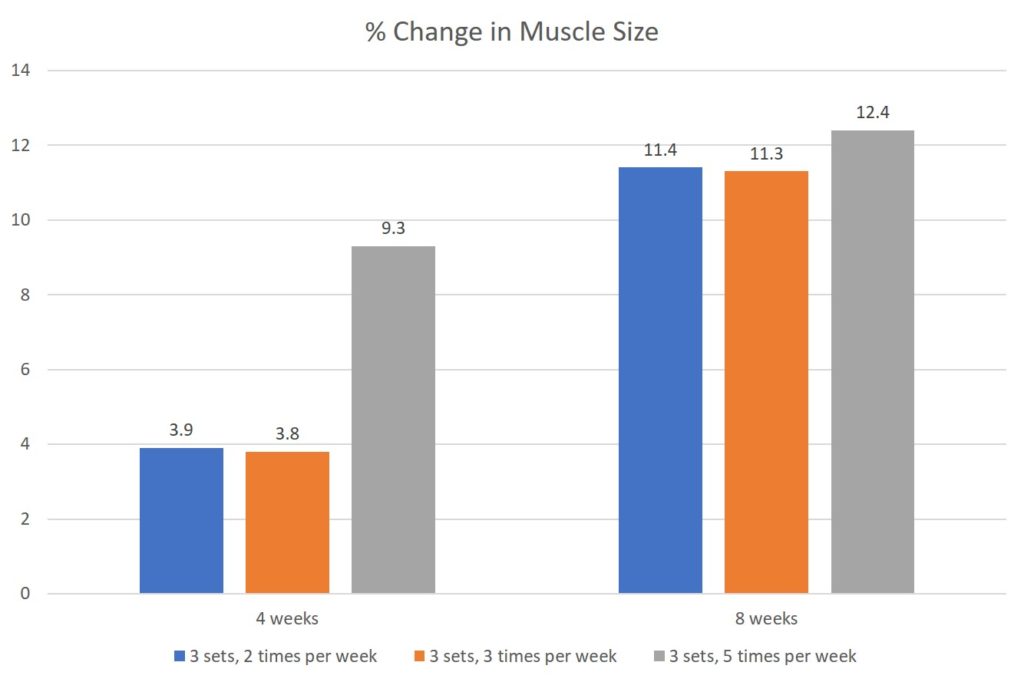
Again, individual results may vary from the averages..This same study by Barcelos showed about a third of beginners benefited from an increase in frequency, another third benefited from a decrease in frequency, and a third showed no additional benefit to either one. Thus, with 2/3 of the subjects showing either a benefit or neutral effect of lower frequency, beginners are best erring on the side of low volume and frequency for their hypertrophy programs.
For experienced individuals, a method of volume cycling using frequency could start off with 5 sets once per week, and then progress to 5 sets twice per week after 6-12 weeks or a plateau is experienced. After another 6-12 weeks or a plateau, frequency is increased again to three times per week (15 weekly sets). A final overreaching phase could then be undertaken with 5 sets performed 4 times per week (20 weekly sets). Then frequency can be reduced back to 1-2 times per week to begin another volume cycle.
The Genetics of the Volume Response
While volume may be a tool to help turn non-responders into responders, especially in trained subjects, there are still limitations to its ability to induce a response. The evidence suggests that how people respond to volume is genetically determined. In this study, beginning lifters performed single leg press and single leg extensions. One leg was trained with low volume (1 set per exercise or 2 total sets for quadriceps), and the other with moderate volume (3 sets per exercise or 6 total sets for quadriceps). Since this was a within-subject design, it removes the effect of genetic variability, and allows a scientist to isolate the effect of volume. The response to low volume was correlated to the response with high volume, with a correlation coefficient of 0.75 (1 is a perfect correlation).
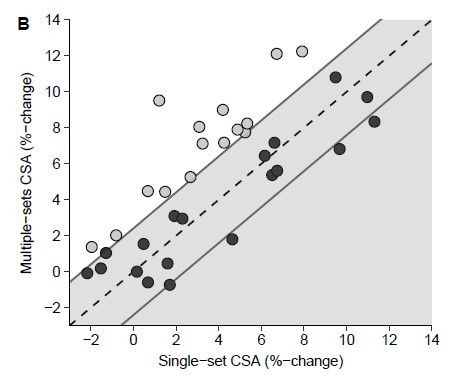
In other words, subjects who were good responders to low volume also tended to be good responders to high volume. Subjects who were poor responders to low volume also tended to be poor responders to high volume (even if the response was improved). This suggests that genetics are the ultimate dictator of how much muscle you'll gain, regardless of your training volume. Some people will grow a lot no matter what type of training they do, and some people won't grow much no matter what type of training they do. While increasing volume may help with your response, it is unlikely that increasing volume will turn you from a hardgainer into an easy gainer. Rather, it is more likely you'll just turn into less of a hardgainer. That's not to say you won't get improvement from increasing volume if you are a hardgainer. If you look at the above graph, there were certain individuals who had a much better response with more sets (such as one individual who went from a 2% change in muscle size with 2 sets per session to nearly a 10% change in muscle size with 6 sets per session).
In this same study, the researchers found that the subjects who responded the best to higher volume had a greater accumulation of total RNA in their muscles. This was indicative of greater creation of ribosomes, which serve as the site for protein synthesis.
Counting Sets: The Direct Vs. Indirect Problem
You'll notice that, in all of this, a set of direct isolation work (like a biceps curl) is treated as a set count of 1, and indirect work (like a row) is also treated as a set count of 1. The question is whether counting direct and indirect movements as 1:1 in terms of sets is valid. Unfortunately, there's no research to guide us to the "real" ratio (assuming there is one). In one study, it was shown that subjects tended to recover faster from single joint lifts compared to multijoint lifts, suggesting that isolation movements may be less stressful than compound movements and possibly benefit from more volume and frequency. However, other data suggests that recovery from single joint exercise may be slower than multijoint exercise, which would tend to support the idea that a set of compound movements shouldn't be counted as "1 set" for muscles like triceps. Also, muscle activity in supporting muscle groups (like triceps in a bench press) may not be maximal compared to a single joint movement, which would tend to question the 1:1 counting method.
Overall, it is not clear whether counting direct and indirect volume as 1:1 is the best method. Nevertheless, there is very little data to suggest any other method, and anything else (like counting each compound movement as a "half set") is based purely on speculation. Thus, until the data clearly shows otherwise, it is likely best to use the 1:1 counting method. This is the same recommendation put forth in a review paper on this topic by Brad Schoenfeld, Cody Haun, Eric Helms, and others.
The Practical Limitations of Very High Volumes: A Personal Experiment
Even if very high volume training may be useful in certain situations, and even if one can tolerate such training, one must consider the practical limitations of trying to train with such volumes, especially in regards to time.
In the high volume training study performed by Schoenfeld, me, and others, the average training time per session for the highest volume group was 68 minutes. The subjects performed 7 exercises, for 5 sets each, for a total of 35 sets per session. However, it's important to note that this time frame of 68 minutes may not be realistic when applied to someone training in a regular gym. In a resistance training study, you have research assistants pushing you along, and also helping to get weights set up for you. There's also no waiting for equipment.
Contrast that with a real-life gym situation, where you don't have anyone hurrying you along from one exercise to the next, and no one is setting up your weights for you. I decided to try an experiment to see how long my training sessions would be, if I tried to do 5 sets per exercise so that I was achieving around 30 weekly sets for most muscle groups. I started out at 1 set per exercise, and would slowly add sets over a number of weeks to allow my body to adapt to ever increasing volume, and to help minimize any soreness. When I got to 5 sets per exercise, I was doing the following in a whole body workout (all sets had 90 seconds rest between them):
- 5 sets hack squat
- 5 sets incline dumbbell press (30 degree incline, neutral grip)
- 5 sets leg extension
- 5 sets machine flye
- 5 sets skullcrushers
- 5 sets machine row
- 5 sets dumbbell curl
This session (35 work sets total), including warmups, took me about 1 hour and 50 minutes to complete. Thus, this is a fairly long workout, longer than what I like to do personally (I don't like to exceed 90 minutes). At three times per week, this would be about 6 hours per week of training. Keep in mind that doesn't even achieve a full 30 sets per muscle group for all muscle groups. Back only amounts to 15 weekly sets. There is no calf work, hamstring work, or direct shoulder work.
Now, one difference between my experiment and the Schoenfeld study is that I utilized a number of isolation exercises. Nevertheless, there is a fairly large difference between my experience and the study. My own experience is probably more relevant to what would happen in real life, as people generally don't have others pushing them along or setting up weights for them.
This brings up the idea that, for most people, achieving very high volumes for most muscle groups is going to be unrealistic, especially if you're using free weights where it takes time to set up. Thus, the most realistic way to achieve high volumes is through the use of specialization, focusing on 1-2 muscle groups while training everything else in the low to moderate volume range.
Tying It All Together
In science, there is something called a "convergence of evidence", also known as "consilience." This is where, when multiple sources of evidence are in agreement, the conclusion can be strong even if the conclusion from any one particular piece of evidence is not strong. In this case, we have lines of evidence from protein synthesis data, anabolic signaling data, satellite cell data, and meta-analytic data, all clustering around a conclusion that more volume is better for hypertrophy, up to around 6-8 sets per training session. This is only if you're using long rests between sets (2+ minutes). If you're using shorter rests, then volume needs may be higher. These are average ranges and individual needs may vary substantially from these ranges. Here's an overview of how all the evidence converges. You can see how every line of evidence points to a similar conclusion.
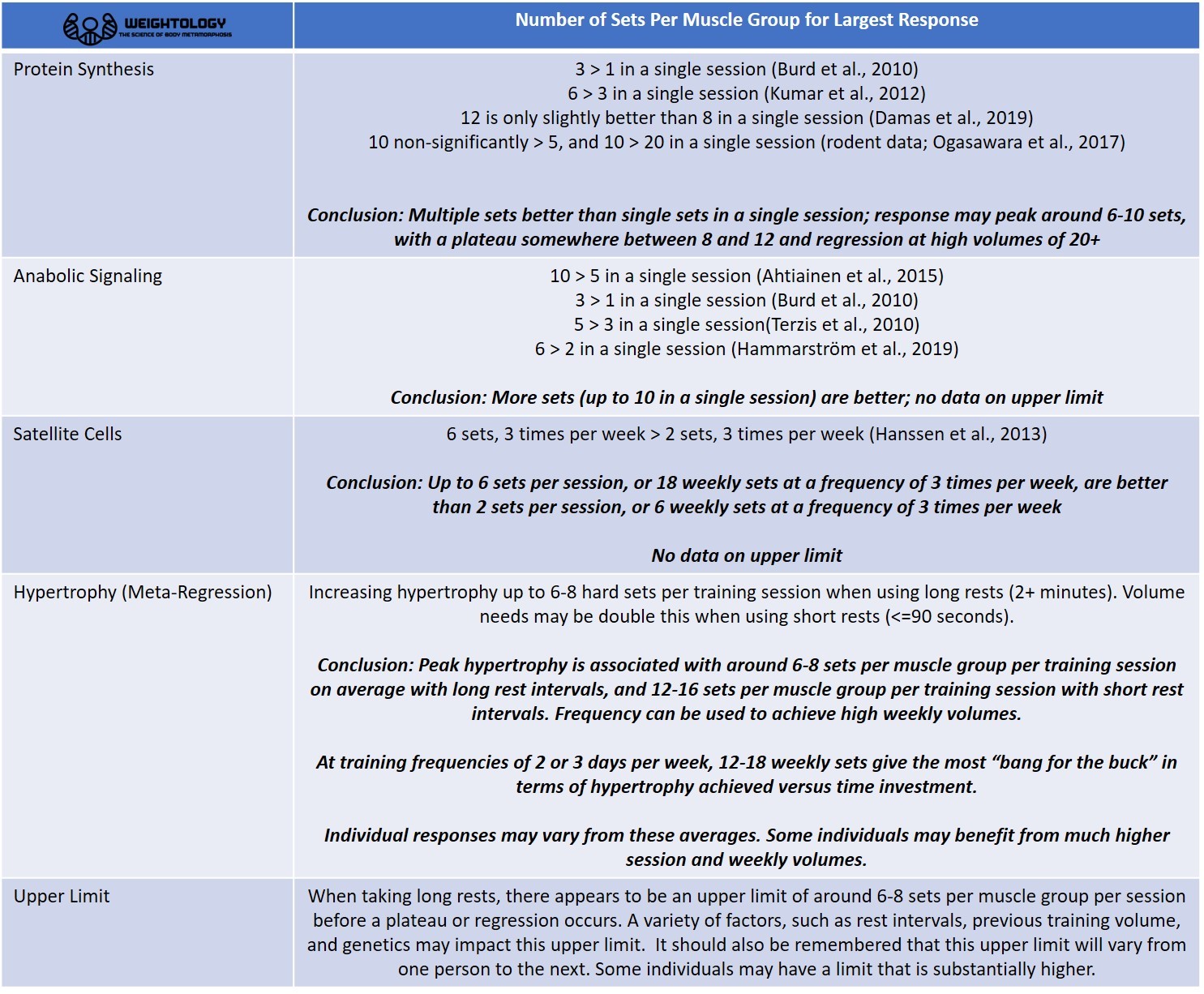
Now, there are a number of limitations to these conclusions:
- I may sound like a broken record here, but this is based on average responses. Individual responses to differences in volume can vary from the overall average dramatically, and thus volume needs will vary from one person to the next.
- There may be some benefits to cycling volume (similar to the Renaissance Periodization method) and having volume "re-sensitization" periods, but this is speculative and the data is limited at this point.
- These results only apply to set volumes involving moderate to high repetition ranges (approximately 8 reps or more) to failure or near failure.
- There is insufficient data to tell us how volume needs might vary based on factors such as age, training status, etc. Age may be a particularly relevant factor here, as recovery time may increase with age. It should be noted that the studies involving 21+ weekly sets all involved young subjects in their 20's. Older individuals may not be able to tolerate such volumes.
- There is insufficient data to tell us how volume needs might vary between different muscle groups (such as upper versus lower body), if they need to vary at all. Currently most of the data suggests there is no benefit, but more research is needed.
- There is insufficient data to tell us how volume needs might vary between different types of exercises (like compound versus isolation, or exercises that load a muscle under stretch versus ones that don't). It's possible that some exercises may need less volume; for example, exercises that load a muscle under stretch (like an overhead dumbbell triceps extension) are more damaging to muscle tissue than exercises that don't (like a hip thrust), so it might be easier to "overdo" it in terms of volume with the loaded stretch exercises.
- Weekly set volumes of 21+ are very high, and are going to be more than many individuals can tolerate or have time for. Remember that significant gains are achieved with low to moderate volumes. You must consider the needs of an individual, including schedule, volume tolerance, recovery ability, available time to train, importance of achieving maximal hypertrophy, injury history, etc.
- It cannot be ruled out that individuals training with low to moderate volumes may eventually achieve the same gains as higher volumes, but over a much longer time frame. However, there is no research examining this.
- Depending upon an individual's available time to train, it may be difficult for someone to achieve 21+ weekly sets for most major muscle groups, even if he/she can tolerate the volume. In situations like these, it may be best to focus on a couple individual muscle groups, training them with very high volume, and using a maintenance volume on the other muscle groups. Then, after a period of 2-4 months, switch to emphasizing some different muscle groups. This is a strategy that has been recommended by Bryan Krahn,
- Most training studies only last 8-12 weeks. It's possible that, if you're training with 21+ weekly sets for a muscle group, you may not tolerate such volumes for longer periods of time (although the study by Raedelli and colleagues lasted for 6 months and involved weekly volumes of 30-45 sets for the arms). This is where the needs of the individual have to be considered, including many factors mentioned before (training history, injury history, how close sets are being performed to failure, types of exercises being used, etc).
- Conclusions in science are always tentative. The conclusions of this review may change as more data is accumulated (this review has already undergone four major revisions as new data has come in!).
It's interesting to note, anecdotally, that some top trainers in the industry use specialization routines and weekly set volumes of 30-40 to achieve maximum hypertrophy in target muscle groups. Bret Contreras often programs 30-40 weekly sets for glutes in his clients, and Bryan Krahn has mentioned using specialization and 30-40 weekly sets to maximize hypertrophy in a particular muscle group. My friend Jacob Schepis also embarked on his own 10-month high volume arm specialization routine, where biceps and triceps each got about 30 weekly sets (about 15 direct and 15 indirect). Here is visible evidence of his results (and this is in a well trained individual!):

Practical Application: A Moderate Volume Example
So how might you apply this information to structuring a training program for maximizing hypertrophy? Here's one example of how you might structure a program that uses the best "bang for your buck" range of 10-20 weekly sets per muscle group. This particular example is a 4-day upper/lower split; most muscle groups are trained via combination of compound and isolation movements. Total weekly set volume is 16 for most muscle groups. Sets per muscle training session are around 8. Sets are stopped around 1-2 reps short of failure to allow for better recovery, and repetitions and exercises are varied to help reduce joint stress.
When trying a program like this, considering using a volume ramp method. Start with 1-2 sets per exercise. Either on a weekly basis, or as you hit plateaus, add one set per exercise. Continue to do this until you hit 8 sets per muscle group or until you've done two successive 20% increases in set volume with no further progress. Once you've hit a plateau that you can no longer break through, then consider reducing volume again.
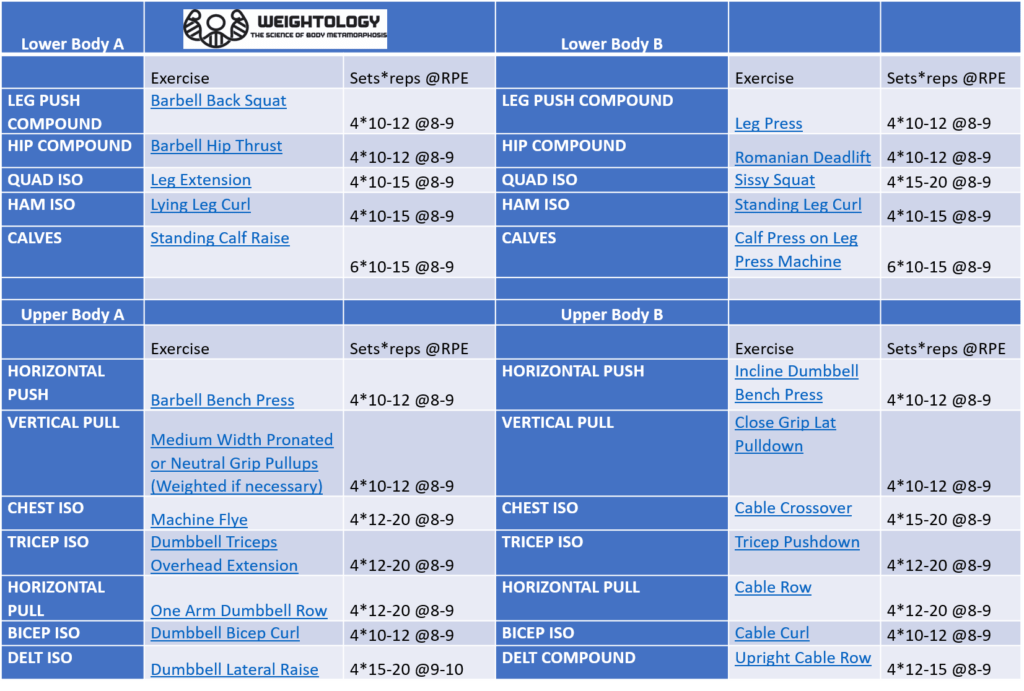
Practical Application: High Volume Arm Specialization Example
In this example, upper body is trained three times per week (one day is a dedicated arm day) and lower body twice per week. Total arm volume is approximately 26 sets for triceps and 32 sets for biceps (counting both indirect and direct movements). Other muscle groups are in the 12-18 range. Sets per training session does not exceed 10 per muscle group.
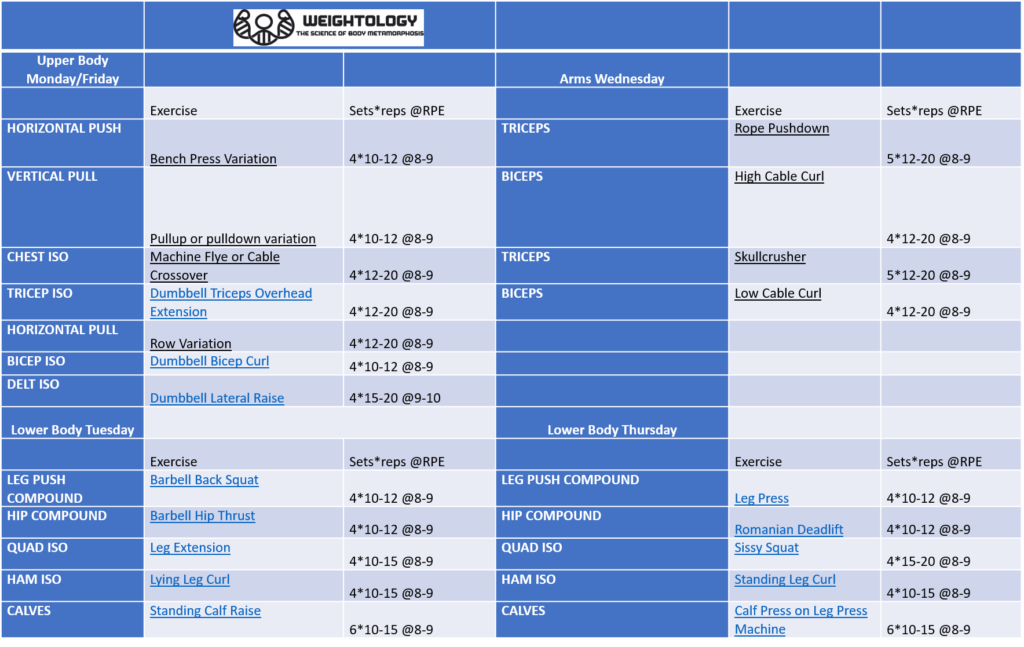
Wrapping It Up
Well, that about does it for the most thorough review on training volume and hypertrophy that you'll find anywhere. You can be sure that this will be updated as new research becomes available. Conclusions in science are always tentative, and based on the best available evidence at the moment. In the case of set volume and hypertrophy, more is better up to around 6-8 hard sets per training session with long rests and twice as much with short rests. High weekly volumes (20+ weekly sets) give best results when split into frequencies of at least 3 days per week. Of course, this is based on averages, and individuals may respond very differently to changes in volume compared to the average. It's also important to point out that 12-18 weekly sets probably gives you the best bang for your buck in terms of hypertrophy relative to the time investment when hitting each muscle 2-3 days per week. If you're looking to do some very high volume training, specialization is the most realistic method of achieving high weekly volumes for a particular muscle group. Also, regardless of how you program volume, the needs of the individual must be considered.
Hey James, since I’m only able to have time to train each muscle 1 x week. Would doing 8 working sets to positive failure per muscle per session be fine to do?
Yes
Hey James, another question: Do you think the SRA Principle (Stimulus, Recovery, Adaptation) can be fully applied to volume increase in direction to the recovery limits? The SRA principle states we should train at the highest peak of the quality we want to emphasize (hypertrophy/strength), but a volume increase would result in more fatigue accumulation. The fatigue environment through more volume results in greater adaptations thorugh the mesocycle, but I find that this is not totally in line with the SRA principle for all kinds of training, not only hypertrophy. I think we should look at training with progressive overload… Read more »
I think that slow progression in volume allows you to progressively overload while keeping the negative impacts of fatigue to a minimum, and allowing the body to adapt in terms of fatigue resistance over time (which allows more volume over long periods). If you start off increasing volume too fast, then you end up creating more fatigue quickly and limit your ability to use volume as a progressive overload tool.
But do you think that the classical SRA curve for hypertropy is a correct represantation for muscle building processes? I mean, the SRA model would imply that we train again while adaptation for hypertropy is happening when we accumulate fatigue for the muscle itself (microtears and MPB) through progressive overload.
The SRA principle would basically say, that there is only one amount of volume (when muscle tissue fatigue is alleviated, we can train again).
Hey James, great article! Is my understanding regarding volume cycling correct, that the upper limit of volume only makes sense at the end of the training cycle? Thus, if we would begin with a volume which is at 20+ sets, it would be too much, and in regards to the inverted U-hypothesis from session to session too much volume, and result in less adaptive magnitude, compared to the case, if we train with less volume? As we would need more progression to stimulated adaptations, more volume is needed and the maximum adaptive capcaity changes in direction to maximum recoverable volume.… Read more »
Yes your understanding is correct.
The purpose of volume cycling is to allow you to use volume as a progressive overload tool so that you can progressively increase it when current volume ends up stagnating. The problem with starting with volume too high is you can reach stagnation quickly and it may be difficult to use further increases in volume to help stimulate progress. In other words, you end up desensitizing yourself to high volume too early.
Really not sure about the MEV/MRV regarding intensity and strength training as that’s a completely different beast.
Thanks for your answer, I am happy to communicate with you about this! Do you think there is real evidence, that the cyclical approach is superior to static volume, which only increases based on autoregulation. I read all of Renaissance periodization books, but I am more on the side of Dr.Eric helms regarding this topic.
Hey James,
How long without an increase in reps ir weight would you consider it a plateau. I’m wondering that to know when it would be appropriate to perhaps add volume.
Personally I consider 2-3 sessions of not being able to increase as a plateau
Awesome, thanks! Would you add sets when stalling on a specific exercise or when stalling on all exercises for that muscle group? For example, would I add sets to bench press if I stalled in it but am still making progress in incline bench press?
I would add sets to a specific exercise that has stalled.
Do you mean with a session, the next time you hit that muscle again or repeating the same exact workout (e.g. Legs A week 3 -> Legs A week 4 -> Legs A week 5)?
next time hitting muscle again
Hey James,
I’ve been looking into other forms of training such as MYOreps and cluster sets to switch up stimulus. Would you recommend these for stimulus changes, and if so, what are some good volume numbers (sets) for each method? To be clear I don’t believe this methods to be superior for hypertrophy, they would just be good for stimulus changes. Also, do I even need to do these alternative methods for stimulus change or will volume changes work just as well?
Volume changes should work just as well. That said, if you’re going to use high intensity/short-rest stuff like MYOreps, I would stick with isolation movements…the short rests on compound movements will likely cause a lot of central fatigue which can limit motor unit recruitment. There’s no hard rule for knowing how many sets a cluster might work out to be. For drop sets, for example, one set to failure followed by 3-4 drops is likely equivalent to 3 traditional sets. It will probably be similar for myoreps as well (1 set + 3-4 myorep clusters is probably similar to 3… Read more »
Thanks! And what are your thoughts on periodization for hypertrophy? How much do you need to switch up about your training plan, and how often?
Programmed periodization for hypertrophy is overrated. Just switch up according to personal preference
Hey James,
I’ve been looking into other forms of training such as MYOreps drop sets and cluster sets to switch up stimulus. I see these alternatives being quite nice due to the TUT increase. Would you recommend these for stimulus changes, and if so, what are some good volume numbers (sets) for each method?
While I think the science is sound, I think there is a huge oversight when it comes to intensity. Training one exercise per muscle group, going to failure (and even with failure there are different intensity levels), and calling it a day has nothing to do with high intensity training where a) the muscle is trained for one set but on two different exercises in a super set, and using intensity techniques such as drop sets, rest pause sets, partials, etc. Again, I think the science is sound, but there is basically no comparison of high volume training vs HIT… Read more »
This is a common response that has no basis in any scientific evidence. It’s a variation of the “Well, they didn’t go to TRUE failure” argument. The problem with this is argument is there is no physiological rationale behind why that one extra rep or two (assuming they didn’t reach “true” failure, which often isn’t even well defined) would cause significantly more hypertrophy, especially given what we know about how motor unit recruitment works. Assuming one didn’t reach “true” failure (again, whatever that’s supposed to mean…failure to do one full range rep? failure to do a partial rep?), an exta… Read more »
Hi James First off this has been an amazing resource, so thank you for your hard work! I had a question on volume. At the moment, I’m doing 10 sets p/w for chest/back/lateral delts, and 12 sets p/w for biceps/triceps. I’m aiming to work my way up to 15-18 sets p/w for chest/back/lateral delts and 18-24 sets p/w for biceps/triceps. I started my program in mid-June and have been doing the same lifts for nearly two months, with only marginal increase in sets when I’ve hit a plateau. I haven’t increased my sets much because I’m still progressing on my… Read more »
I would keep your volume the same as long as you’re progressing. Save the increase in volume for when you finally plateau
For starters, to echo everyone else’s comments, this truly is a wonderful and very informative article. Thank you for putting this together, James.
Secondly, my question: as I understand it, the article is primarily focused on driving hypertrophy. Assuming a lifter is eating at maintenance calories, what should volumes be if the goal is not to increase muscle but simply to maintain your physique/body composition?
Haven’t seen any research studies and/or articles specifically focused on this subject (i.e. maintenance).
Thanks,
Gilad
It takes very little volume to maintain muscle. You could do 50% of your normal volume and maintain.
Thank you for sharing all this information. I’m missing something from your conclusion regarding the Short vs Long Rest Intervals, concluding that you need to do about double the amount of sets with short rest, vs long rest, for the same gains. When I compare the two charts at 6 Sets Per Session, the trended change in Effective Size is about 0.35 for both short and long (trained). So wouldn’t this mean that at this number of target sets per session it comes down to individual preference for rest intervial, because both would yield approximately the same results for trained… Read more »
You can’t directly compare the effect sizes between the two charts because the criteria for the included studies are different for each.